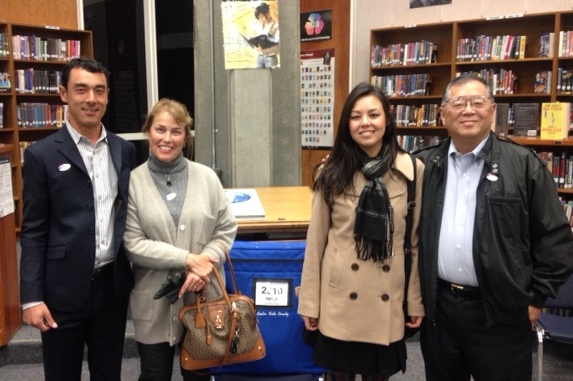
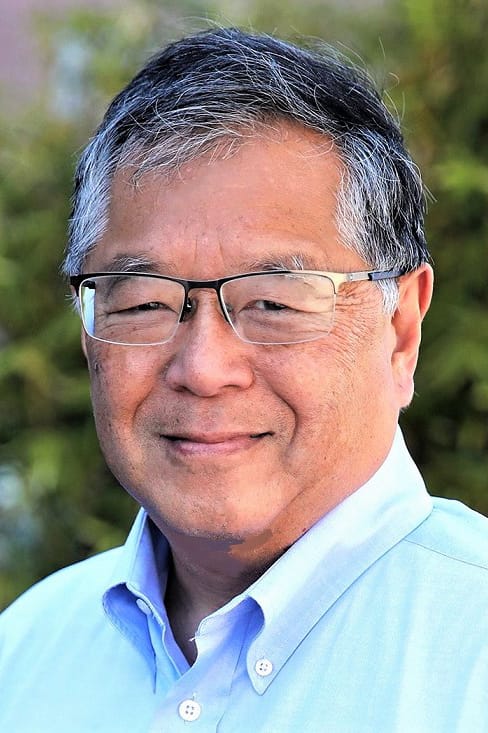
John Onoda is a principal at iQ 360, a strategic consulting firm with current clients in the United States and Japan. He has led communications at companies including General Motors, Levi Strauss, Visa USA and Charles Schwab. He also has decades of experience providing counsel to major global corporations, universities, NGOs and government agencies. He is a member of the U.S.-Japan Council, and currently serves on the board of the Page Center for Integrity in Public Communication. He is married to professional landscape artist Teresa Onoda and they live in the San Francisco area.
(Click on this icon to follow John:  )
)
Podcast
Transcript
Introduction
Hello, everyone. I’m very honored to welcome today Mr. John Onoda. I met John through the U.S.-Japan Council (USJC), where he is a member of the Board of Councilors. John is one of the wisest people I’ve ever had the honor of meeting. As a seasoned professional who’s headed communications teams at major brands, including Levi Strauss, General Motors, Visa [and Charles Schwab], he always has strategic long-term vision that leads to growth and cuts through the noise. He is now a principal at iQ360, a business consultancy and communications firm.
Today, I’m really interested in asking John about his Japanese American identity and how he asserted himself and became the top Asian American executive at major companies. I’d also like to ask how he sees the future of communications in an era when authentic information is increasingly hard to find.
Thank you so much, John, for joining me today.
I’m happy to be here.
Childhood and Upbringing
Would you mind starting by telling us where you were born and raised?
I was born in Chicago, Illinois, and I was raised in Gary, Indiana.
I was born in the early 1950s. So it wasn’t that long after World War II. And Gary, Indiana is a blue-collar factory town. It’s in the Midwest, about an hour outside of Chicago. It is not a refined, cultural, academic-minded area. The people back then especially were rough around the edges. I grew up in that environment as a youngster and then a teenager.
In my community, which was on the edge of Gary, we were the only Asian family. Not just Japanese American, the only Asians. During the entire 18 years that I grew up there, I think the only other Asians I saw in our area were people visiting us. So I grew up in an entirely white culture. There were some African Americans there too that I got to know, but in my school, my classmates tended to be all white.
So I’m very different from a lot of other Japanese Americans who grew up in California or Hawaii, where there’s a larger community and a stronger sense of Japanese culture and behaviors. I grew up in the wild. There’s this old term, “banana”— yellow on the outside, white on the inside. I am like the ultimate banana.
Because it was after World War II, I think the majority of Japanese Americans on the mainland were just trying to go under the radar. They did not want to be noticed because they’d been locked up. All of my family, my parents and their parents, had been locked up in the internment camps, which now that I look back as an older person, I’m sure was a traumatizing experience.
My parents wanted me and my brother and sister to act and behave very all-American, even though we don’t look at all like the average concept of white Americans in the 1950s. So that really informed my behaviors. I don’t come across—and I haven’t throughout my career—as any sort of stereotype.
I’m very comfortable with being in rooms where I’m the only Asian. This is fortunate because in my corporate career, especially when I was in senior management, I was always the only Asian. I would attribute some of my success for that not really bothering me.
Thank you so much for sharing that. I’d like to come back to that when we talk about your corporate career.
Just taking a step back to your family history, how did you end up in Indiana to begin with? And were you third-generation Japanese American?
I’m a Sansei. My father was in the 442, the Japanese American combat unit. He got the GI Bill after coming out of the army, and went to law school. He found a job at Inland Steel, which was one of the major steel corporations, and he was a junior attorney there.
[My parents] were just looking for a place where they could afford to live. I think I was born in a charity hospital. We were very poor. When you come out of those internment camps and you have no possessions or wealth, you’re basically starting from scratch. My parents were both very scrappy, strong-willed, and determined, and they made tough decisions. It was typical of them to separate themselves from the community if that’s what it took to find affordable housing. They willingly made that sacrifice.
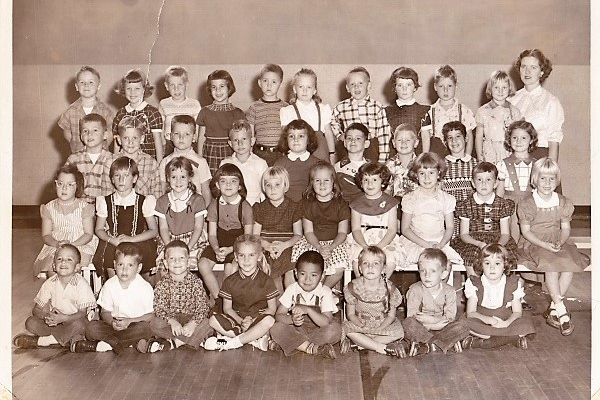
Comfortable Being Uncomfortable
You said that you’ve always been comfortable being the only Asian in the room. But as you were growing up, did you ever feel that you were different from other people, or that you had to make an extra effort to fit in with everybody?
I’m comfortable with being uncomfortable. Of course, I experienced really nasty racism growing up, especially being the only Asian.
When I was a little kid, maybe breaking windows with baseballs, I remember my mom telling me, “People are going to take one look and remember you—no matter what you do. So for good or for bad, you choose which way it’s going to go.”
And I had teachers who were racist against me. One was a former Marine who fought in the Pacific. Even then, I could understand why. Of course, it’s very personal when you’re the object of those sort of things, but in the grander scheme, it would happen today. It happened after 9-11. That’s just the reality of life.
But because I had those experiences, and I wasn’t protected by any community and there was no support network, I grew up really tough-minded. That sort of stuff doesn’t faze me at all.
That is incredible!
Strategizing and Building a “Robot”
Related to your childhood, I wanted to touch upon your love of books. You have this beautiful bookshelf behind you. You mentioned in an interview with USJC that, left to your own devices, you can spend time reading books for weeks on end, and that you’re perfectly happy if no one talks to you.
It sounds like you’re more of a quiet type, and I’m really amazed at how you became a top communications professional. Because with communications, while there’s a lot of writing involved, it’s all about interacting with people. And for me too, as I was growing up and going through a hard time, my favorite friends were characters inside books, and not so much living people.
So how did you make that transition, and how did you decide that communications is the field that you wanted to pursue?
I’ll work backwards [to answer your question]. I did not intend to be a communications professional. I thought at first that I was going to be a newspaper reporter, because I’ve always loved to write.
And later on, I decided that I wanted to be an academic in a school of communications. To that end, I got my undergraduate degree in communications. I then got a law degree, and after that, I got a master’s degree from the Medill School of Journalism at Northwestern. I thought it would be great [to have] differentiating credentials and teach First Amendment law, libel law, and other public policy issues at a school of communications.
If that is your game plan, the rule of thumb is that you first go out into the real world and get some experience. That is why I was a newspaper reporter for five years, first in Omaha and then in Houston. I had a successful journalism career, did investigative pieces, and followed the major stories going on in Houston.
I loved the job. It was probably the best job I ever had in my life. It was incredible amounts of fun, but it paid like nothing. And I got married, and my wife was a school teacher, and she wanted to be a full-time mom. I thought that on my salary, even as a top reporter, we were going to be on food stamps. And that didn’t sound right to me.
So I went for a higher paying job. Public relations paid 50% more than journalism, right off the bat. I didn’t know anything about public relations except that it paid a lot more. So of course I was horrible in my first job, and I believe I almost got fired because I didn’t understand the difference between journalism and public relations. But someone took pity on me and mentored me for a year or two, and I figured it out.
I thought, “As long as I’m now having this surprise career, I should try to make as much money as I can.” So I set this ridiculously ambitious goal of becoming the head of communications of a major corporation by the time I was 45. If I had known how impossible it was, [I may not have set that goal.] I might as well have said, “I’m going to be an astronaut” or “I’m going to climb Mount Everest.”
But I am a strategic thinker, so I created a model of how I would do that. There are a number of boxes in my profession: internal communications, external communications, financial communications, and so on. And I thought, “I’m going to check every box.”
So I changed jobs a number of times, which [by the way] drove my father crazy. He stayed in one job his entire professional life, and when he retired he was the oldest employee of Inland Steel. So having a son who’s changing jobs like every two years did not sit well with him.
What I realized pretty early in my career is that I couldn’t be the bookish, introverted person that I was and reach the top rungs. I am extremely introverted. I could not see how that was possible. I had to create a model in my head of how to become this other person.
This sounds like a joke, but it’s the truth: I decided, “I’m going to send a robot to work. The robot is going to look and talk exactly like me, but it’s not me. It’s the robot. The real me is sitting here in my library reading books, and the robot is going to go.”
Wow, that’s awesome!
Then I programmed the robot to be much more animated, to speak much more loudly, to argue with CEOs or whoever I had to, to go into large meetings with strangers and be a host, speak to the news media at press conferences—all these things that the real me would never do. Then all the rejections and negative things you fear will happen to you when you step out that way wasn’t really happening to me. It was happening to the robot. So I just elaborated on this model, and son of a gun, it worked!
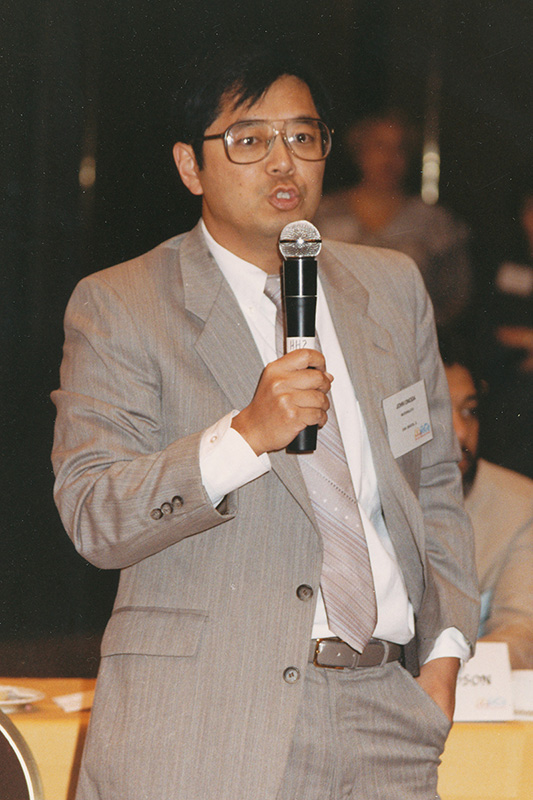
When we talk about careers, we talk a lot about “fake it till you make it” or pretend you’re acting. But I’ve never heard of having so much distance between what you’re doing and what you want to do!
As an introvert, the worst thing I had to do was when I was Head of Communications at General Motors. General Motors had been number one on the Fortune 500 for 45 years.
When you’re a leader at that sort of company, there’s a lot of ambassadorial functions that you have to do. You have to go and meet heads of nations, ambassadors, and all sorts of people like that.
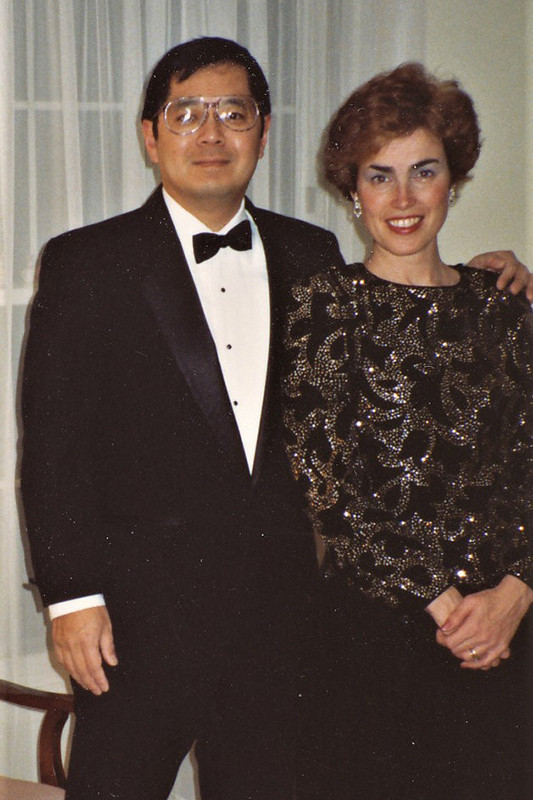
There was a black-tie event that was rotated among the big three automakers: Ford, Chrysler, and GM. And it was always the Head of Communications who had to host this event.
So my bad luck, it turned out I had to be the host. And I was in a tuxedo, my wife in a formal dress, standing there at the entrance of this giant thing and greeting every person who came in. Most of us introverts would rather die than do that! There I was, acting as if I was comfortable, and reaching out and patting shoulders. And I thought, “You are such a big fake. I cannot believe you are doing this.”
Amazing!
Embracing the Culture
I have a side question related to that. I’ve always worked in nonprofits or government entities because I found that it’s really hard to fall fully in love with a company or a brand. To work in communications, I feel like you really need to trust and believe in that brand. If it’s okay to disclose this information, did you also have to fake a little bit [of your love for the brands you worked for]?
Your insight is absolutely accurate. I would phrase it differently. You’ve got to train yourself to embrace the culture.
My experience is that everywhere you go, there are good people. Most people are good and well-intentioned. In their heads, they’re the heroes of their story, and they are doing good things.
So this is about a cultural perspective. If you come from someplace like San Francisco, we have a very distinct view on what’s good and not. And if you come from Washington, you have [another] way. If you come from Houston or Detroit, you have [another perspective]. I also worked in Memphis, Tennessee, which is the heartland of the Bible Belt. And the perspective there is very different than any of these other locations.
Company cultures are as distinctive as regional or international differences. The culture at Levi Strauss or McDonald’s [where I was head of global media relations] is vastly different from the culture of General Motors or Visa. And [as a consultant] I’ve had hundreds of clients [around the world, many of which had specific cultures]. So if you’re going to do the work I do, it is essential—not negotiable—that you respect each culture.
If you are inauthentic or faking it or secretly holding yourself aloof, people will know. They’ll sense it immediately. You will not be trusted. You will not be allowed into the inner councils. So you have to have this capacity to do that.
Similarly, if someone goes to work in a foreign nation like Japan, you should respect and embrace the culture. If a Japanese person comes here or we go to Brazil or Mexico or whatnot, they’re very different. So that facility of thinking of it as a learning experience [is critical]. You can revert back [if you’re uncomfortable], but you should try.
Especially if you’re an officer and you’re managing people and you’re representing the company, especially in communications—where my feeling has always been we should model the values and vision of the company that we work for—we have really got to try to do that. That is part of the job as far as I’m concerned.
Thank you so much for that. I think it’s really helpful to have that distinction between culture versus every product that brand puts out, because if you have the essential culture, then you’re okay—you’re able to market each of the products.
Finding Your Value Proposition
And shifting gears a little bit, in the same USJC interview, you also mentioned how you were able to climb the corporate ladder by demonstrating your “value proposition.” What is your value proposition, if you don’t mind sharing? Do you have any advice for others who are still looking for theirs?
As AI increasingly replaces a lot of human activity, I think the people who will continue to add value and have jobs [will be those with humanity]. It’s our humanity that is going to separate us. It’s the human insight, the human perspective. It’s factors like integrity, loyalty, and empathy.
How do you cultivate the human aspects that the world will need? The world will actually need more of it in the future.
I think it’s being a continual learner. I think it’s respecting all these cultures. I think I’ve had a broad experience, but I’m sure the proportion of the world that I truly understand and can integrate is a fraction of 1%.
The world might need somebody—maybe Secretary-General of the United Nations—who has this sort of perspective. A few world leaders may have it, but most world leaders clearly demonstrate that they do not. They think about their culture, their constituency, their national interests, etc. [But] the problems are global. The environment doesn’t care where borders are. Wealth inequality happens around the world.
So think of your growth as a human, as opposed to a working professional. The two are interrelated, because 10 or 20 years from now, [those who thrive are] going to be the ones who have cultivated an applied learning of what it means to be a human.
I see. So how does each person find their own value proposition?
I will tell you how it is for me. Communications is a strategic function. Most people think it’s about a press release, or rolling out a product, or having a big party and other such things. Those are just tactics; a means to an end. They come and go. Most of it, no matter how interesting or creative, will have no [lasting significance].
When you’re working for an organization or society with goals, [communications] has to advance those goals. Communications can help organizations achieve their strategic goals.
If you say, “We’ve made a decision to stop using oil and gas energy,” or “We’ve made a decision to pull entirely out of China and invest all of our assets in Australia” and told me to put out the press release the next day, it would have zero impact. It’s largely irrelevant.
But if you gave me any of those instructions and I was in on the strategic planning a year in advance, I could do a lot in terms of informing the right people, looking at the relationships you need, establishing your credibility with certain groups or certain nationalities or governments.
Strategic planning takes time, and building trusting relationships takes even more time. And it’s not based on words; it’s based on actions, policy decisions, and critical business decisions. So the higher-level activity, where I ended up in my career, is not even communications. Because if you make a bad decision, it doesn’t much matter what your communications says.
So my value is to tell the people in the decision-making process what I think about the outcomes and why. I’ve always been concerned about the environment and about human rights. Whenever those issues came out while I was in the corporate world, I raised questions. I found people willing to talk.
My value is being the person who’s tracking issues, stakeholders, trends that have an impact on corporate reputation. Corporate reputation is, for most companies, their largest asset. So I’m helping them better manage their largest asset.
Now, I’ve said what I just told you to other people in many different situations. But it would be very unusual if someone entirely agreed with me or entirely understood what I was saying in one conversation. So generally, I spent years going into meetings talking about all these issues, putting forth ideas, and very often losing. I gained credibility by consistently expressing a concept that I really believe in. And being transparent that I’m doing it not because I have a certain set of beliefs, but because I’m focused on the strategic outcome that the organization has said it wants to achieve.
I see. It sounds like you’ve found it over time because you’ve explored such a wide variety in your career—many different brands and various roles in different fields of communications.
Well, because I’ve been doing this for decades, I’ve seen the outcomes when my recommendations were taken and when they were rejected. I’ve seen it play out at the highest levels. And I am very happy with my track record.
Of course there were times I was wrong. I tend to be wrong on dire predictions I make, more on timing than probability. Sometimes I think they’re imminent, just like I see imminent threats related to AI. And this is one where, over the next decade or two, I’ll find out how good a prognosticator I was on this issue.
Putting Aside Asian Values
Thanks to your wonderful insight and wisdom, you’ve climbed the corporate ladder. And you mentioned in the beginning that you were comfortable with being uncomfortable and being the only Asian in the room. Despite that, do you carry some Asian [values] with you, such as modesty and humility?
No. In fact, as the senior Asian in most of the companies I’ve been in, I’ve been asked to speak to Asian employee groups, and I’ve had staff around the world. So I’ve had more of these discussions about career and doing well in the corporate environment than I can remember.
My parents raised me on the Asian characteristics of, “Keep your head down,” “Let your actions speak for you,” “Don’t speak up,” “Be humble.” That might absolutely be appropriate outside the workplace, but in non-Asian American corporations and the global business context, it is not helpful.
I’ve been in rooms with all Asian employees and I say, “You have to speak up. How am I supposed to know who of you is talented and has that leadership spark if no one will speak up?” I just see a sea of [expressionless] faces. And most of them still won’t speak up.
The Asian values that have been deeply ingrained in me, such as the sense of responsibility, are almost like a curse. I am the first to accept blame. Whenever I work above and beyond, it’s out of this sense of responsibility and obligation. Overall, I can see objectively that it’s a wonderful thing. But the amount of time and energy and sometimes money that I’ve spent out of a sense of responsibility is almost crazy.
Coming out of World War II, my parents were trying to teach my brother and my sister and me to be these perfect American citizens. I still have a paper, which I think I wrote like in second grade, that says, “I want to grow up and be a responsible American citizen.” That was my parents programming me at a very early age.
The sense of responsibility, hard work, punctuality, showing respect to others, and the ability to show respect to cultures—either corporate cultures or foreign cultures—and other people are a gift that is part of our [Japanese] culture.
For me, those traits were personally programmed as opposed to learning it in a community context.
When I go to USJC meetings, which tend to be the largest Asian gatherings I go to in the United States, I’m more aware of being in a racial group than I am when I’m with white people. It’s just like an awareness that probably a lot of Asians feel when they’re in an all-white meeting, especially if they were the only Asian. For me, it’s the reverse.
When I traveled to Japan for the first time, becoming entirely invisible on the street was a new experience. I had never felt like nobody was watching me, because I was raised where everybody is watching and noticing you.
It’s fascinating to hear about your experience growing up and in corporate America, and how it relates to the initiatives that are most important to you. Thank you so much for sharing that.
Setting the Standard
Would you be able to talk about some of the communications initiatives that were especially memorable or you’re especially proud of?
I’ll give you a couple.
In the early 1980s, I worked for the largest independent oil and gas company in Houston. This is one of the reasons I’ve been so involved with environmental matters. It was my first corporate job, and it was called Mitchell Energy and Development. The owner was a visionary billionaire named George Mitchell, who founded the Woodlands Conference on Sustainable Development. As far as I know, that was like the first major sustainability conference in the United States. And we attracted very significant players to all get together and talk about this.
As a PR person, I wrote op-eds for former President Carter and William Ruckelshaus, who was the first head of the Environmental Protection Agency (EPA), and I was the lead communicator to support sustainability [initiatives]. I was younger and more impressionable back then, but at this very early point in my career, I learned the scope of what the world was facing and what the stakes were. That influenced what I have done ever since.
Another key development was when I was with Levi Strauss, which at the time was the largest apparel company in the world. And it was at the time of globalization, in the early 1990s. When globalization happens, the first industry to be affected and make changes is light apparel. Because apparel manufacturing, which is now done in places like Bangladesh, is fast [and does not require a lot of capital investment]. They just train the workers, who are usually women at sewing machines.
Because we were the largest apparel company and a significant player in globalization, we came under pressure from progressive groups to start tackling the global supply chain: issues like child labor, sanitary conditions in the workplace, and women’s rights. And the corporate world had never taken responsibility for the supply chain.
At first, we rejected it all by basically saying “That’s not part of our company. We don’t own these [downstream] companies. We can’t go in there telling them what to do.” Bob Haas, who is the great-great-grandnephew of Levi Strauss, was the chairman of the company, and I reported to him. And bless his heart, he said, “No, we’ll try to do it.” So we broke ranks with the rest of Corporate America, and tried to drive better working conditions and greater equity along with globalization.
[Companies like Levi’s] usually have foreign field agents, whose job is to go to all these factories—and there are thousands of them—and say, “We need 2,000 t-shirts,” sign the contracts, and show up at the docking port. When we told these agents, “You’re going to start tackling safety conditions, how many women to a bathroom, harassment on the job, and all these other concerns they have,” their initial reaction was, “That’s not my job. I am not going to do it.” They refused.
So as the community affairs and public affairs function at Levi Strauss, we took this on. I went out into the field in Mexico, China, way out there. And this is before there were cars there. Everyone was on bicycles. And we came up with a code of conduct and standards. Then we started training and enforcing it to some degree with the contractors.
These were all new behaviors. No one was doing this. After we did it and it sort of worked, it caught on with Nike and other apparel companies. And then managing the supply chain became true for all sectors. That is now how modern business conducts itself.
So to express it in grandiose terms, we changed the world. We set these [standards]. So that’s another early experience [when I learned big change is] possible. We can address that concern for broader society and these environmental values. It takes someone willing to take it on and risk failure and anger from politicians and everyone else. And nothing has changed my mind about what is possible.
Thank you so much for those really wonderful examples. I had no idea you were already working on sustainability in the 80s and already working on supply chain and human rights in the 90s. That is revolutionary.
I am also encouraged by the fact that when you try to support your workers, you not only make the world a better place, you’re working on long-term growth for the company as well as loyalty to the company. It really touches upon all the human aspects that you just talked about.
Right. That gets back to my earlier point. Your humanity is where you can demonstrate that you add the most value and are making the greatest contributions to organizations’ long-term goals.
AI, robotics, drone technology, and quantum computing—we will have all those things. The tools are going to be so much more powerful than those we use today. But if we don’t have this human element driving them to create this new world that we’re going to need, it won’t get done.
The Future of Communications
Related to that, I wanted to ask a few questions about your thoughts on the future of communications. We just talked about the human element. It’s already been 10 years since we started talking about “post-truth politics” and “alternative facts,” and things have only gotten worse since then, not only politically, but also with the advent of AI. It’s hard to determine what is true, and probably even more importantly, what is authentic. When you have deep fake videos and such, you can make up someone saying things that they didn’t. So in terms of communications, how do we convey not only accurate but also authentic information that is believable, importantly, and also memorable for people?
No one has a strong and compelling response to that at this time. I’m on the advisory board of [Pennsylvania State University’s] Arthur W. Page Center for Integrity in Public Communications, and our board meetings are filled with top communications and journalism professionals and academics in the space. We sit there and have these energizing and somewhat depressing conversations about the state [of communications].
Honestly, my position is that we’re losing the battle. The amount of intentional misinformation put out there just to roil the American society and the American model and create antagonism is astonishing. And it happens within a matter of days after a major event.
I’ve read something—more in the area of fiction than not—that we might end up having screening capabilities that we buy, like online streaming. They’d go through our feeds with AI. So if you have a Facebook or TikTok feed and you say, “I want everything that’s clearly malicious and inauthentic scrubbed from my life,” it will do that. If you say, “I’m willing to entertain other points of view from these three sources,” it will do that. So you basically have your own AI-driven editor attached to your intake.
Now, the danger is that depending on your personal tastes, you could just use that to live a life driven entirely by false information that makes you feel better. Like all these other technologies, it’s a two-edged sword.
But in terms of what I’ve read, personal agent technology is now becoming increasingly available. It’s calling and making your travel and dinner reservations, and [arranging] meetups with your friends and everything. So it doesn’t seem far-fetched to say, “I don’t like this sort of material” or “I don’t want to hear about this sort of issue” and assign it to screen that out.
That’s fascinating, but what’s scary about that is it’s entirely up to each individual. If that person decides not to do it, they won’t. And what is really disappointing and sad to me is social media companies like Facebook stepping down from fact checking. It’s clear that they decided to give up because it was out of control and they couldn’t be responsible for it.
That’s right. The damage at the personal psychological and emotional level, and the societal level, by addiction to mostly online social media platforms is really disheartening. I hear many accounts about how it’s impacted young people and their ability to relate in person one-on-one or to have lengthy conversations, as well as their attention span and academic performance.
I see. So it really is up to each parent when they talk to their children, or each school when they talk to their students. I guess we just have to do it in a grassroots way.
Well, I think this is another example of the humanity piece. Some of the tech titans say that they’re not letting their kids have access to social media until they’re like 16. In a way it’s a little hypocritical, but you could also say that they know better, so they’re doing better. We know it’s having this harmful effect. So should we not exercise our parental responsibility and at least tackle it in our homes and with our children? Maybe we can’t control the schools or what our children do once they step outside the house, but parenting is a human behavior, and maybe we need to up the game in a number of dimensions.
That makes sense, thank you.
Related to this, [the world has] become such an echo chamber. We talked about how we can follow whatever news we want to on social media or pick the news app that we want to follow, and information is filtered that way. Is there any way media and communication companies or individuals are able to unite people rather than divide? How can we leverage the tools that we have?
I think it is possible. Bluesky is an attempt.
But a lot of the fault lines in society writ large and the way humanity is managing itself is part of our DNA. It appears that the way humans are wired, hate and fear have always been much stronger than lofty-minded behaviors and concepts. And it is undeniable that for social media and their algorithms, exploiting negative emotions is much more effective than positive emotions. It may be that building awareness around it, and parenting and instilling life lessons [would be the remedy].
Now, I think you and I have one of the greatest inoculators around, and that is reading books. Book reading is where you learn empathy. Especially first-person [narratives] and fiction. When you watch videos and listen to podcasts, it’s passive listening. You can learn information, but you are not earning that empathy muscle or developing that empathy model the way you do when you read Pride and Prejudice or any great literature and you’re inside Elizabeth Bennet’s persona.
Unfortunately, what I’m hearing from academics is that students, even English majors, can no longer read books. Their attention spans are shot. Their brains have been rewired. Those of us who still love books and have never stopped reading are always exercising that empathy muscle, the way a jogger keeps their cardiovascular system going.
So my natural inclination is always to say, “Pick up a damn book and read it.” There’s an endless supply of wonderful books. Reading also trains you to have a longer attention span, concentration, and focus. I’m sure I’m horribly biased because I’m a reader, but that’s one of my conclusions.
On Books and Reading
That’s so wonderful, and ties in beautifully with the love of books that you grew up with. I have heard people who only read nonfiction books say, “What’s the point of reading fiction?” That’s absolutely [disappointing]! I love what you said about books being like a vaccine and building that muscle as a kind of exercise. What are some of the books that shaped who you are today?
[Growing up,] I wasn’t a sophisticated reader. I read a lot of science fiction and fantasy and adventure novels.
In those days in the 1950s and 60s, science fiction was written mostly by white male former military engineers and scientists. Arthur C. Clarke, Isaac Asimov, Poul Anderson—a lot of them met [each other] during World War II. Their books are about hardware, rocket ships, time machines, and things like that.
If you walk into a bookstore today and look at the science fiction section, I would say women authors far outnumber men authors, maybe more than half are people of color, and a third of them might be LGBTQ authors. And their stories are all in the social sciences, with psychological, sociological themes, although they’re extrapolating the way science fiction does.
But in those days, authors used to write about the hard sciences, like physics and chemistry. At the time that I was reading science fiction, there were two preeminent authors.
One was Isaac Asimov. If you look at his bibliography, he probably wrote more books on more topics than any other English-speaking or English-writing author. He just wrote about everything. And he was a genius.
I managed to interview him in his apartment in New York overlooking Central Park. This was part of the Woodlands Conference, and I featured him in one of our newsletters. I asked him about globalism, which was a new concept at the time. I said, “What do you think about globalism? Who would be the first adopters?” Because no one knew. And he said, “I think business is going to be the first adopter. Because in business, what goes on over there has instant consequences for what’s happening over here. So there’s a business reason for them to connect the dots faster than anyone else.” And son of a gun, he was right!
There was another author, Robert Heinlein, who wrote a famous series of young adult novels. I think he’s largely credited with establishing the sort of libertarian wing of thinking in politics. That libertarian philosophy and being fully capable of functioning alone as an individual outside of society was a major theme of his writing. It made a lot of sense to me at that time, and I grew up on that.
It’s really interesting how the way you think strategically and long-term has a lot [in common] with Isaac Asimov and his long-term vision. And he was right, like you said.
Finding Your Tribe
Would you have any advice for other people who might be struggling with their identity because they have ties to multiple countries, or feel a little different from others and are trying to find their own way?
I think identity is actually a lifelong journey. I don’t think you should feel the pressure like, “I must have it figured out. I’m 25 for God’s sake!” I think most of us are working on it throughout our life. It is a lifelong project. You want to become a unique person who has a unique experience that is most appropriate to you.
But [you need to] figure out that mix. Are you someone who is carefree and adventurous? Somebody who’s artistic and quiet? Who is this person? And what is the society or culture in which that person feels most at home?
Finding your tribe is almost like the ultimate key to happiness. And it’s very hard to do. It’s nothing that happens accidentally, in my experience. It’s mostly an intentional journey. So you’ve got to knock on a lot of doors and you’ve got to sample a lot of different tastes and dishes and cuisines. You’ll know, “I’m someone who likes fiery Mexican food. I thought I liked Chinese food, but no.”

Similarly, there are all these cultures around the world. And just because you were born in Bentonville, Arkansas, or Beijing, China, that isn’t necessarily where your tribe is. You [can] develop yourself as an individual and be free to explore fully without the constraints of your culture. The same goes for wanting to take risks or not, wanting to learn or not, wanting to work hard or not, wanting a big family or not.
So I think it’s a long journey and the adventure is to go sample different lifestyles. Go live in Bangkok or Venice for a year. Travel around the world. If you’re at a university, go to the International House and just say to a foreign student, “Can I buy you lunch? I want to hear what life was like in Afghanistan.” So many people don’t take advantage of the explorations that are possible, usually like right outside their door.
Thank you so much for those words of wisdom on finding your tribe. That’s so helpful.
This was really valuable for me personally. I really enjoyed the conversation.
I enjoyed it very much. Thank you for being such a good audience.
Thank you; you’re so kind. Well, take care!
Bye bye.