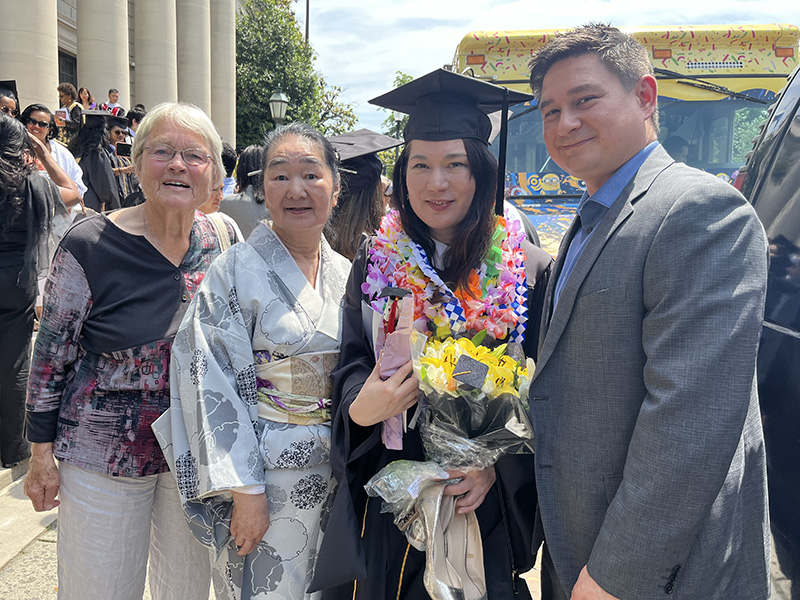
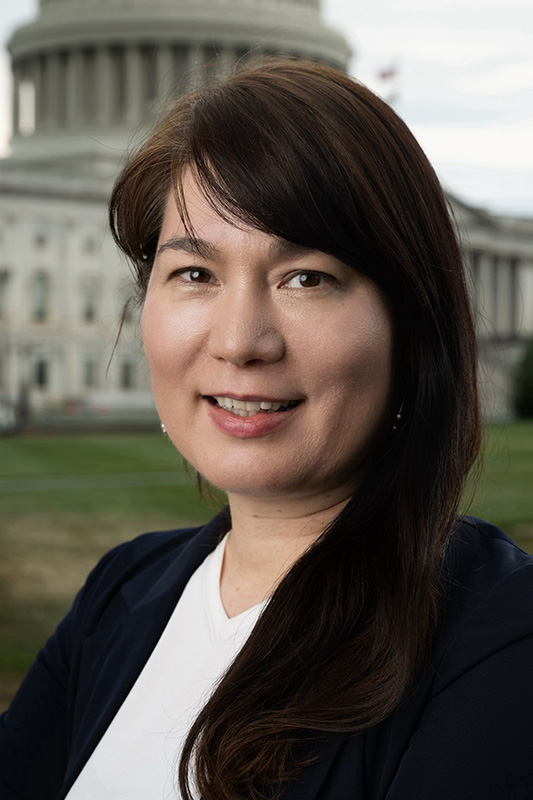
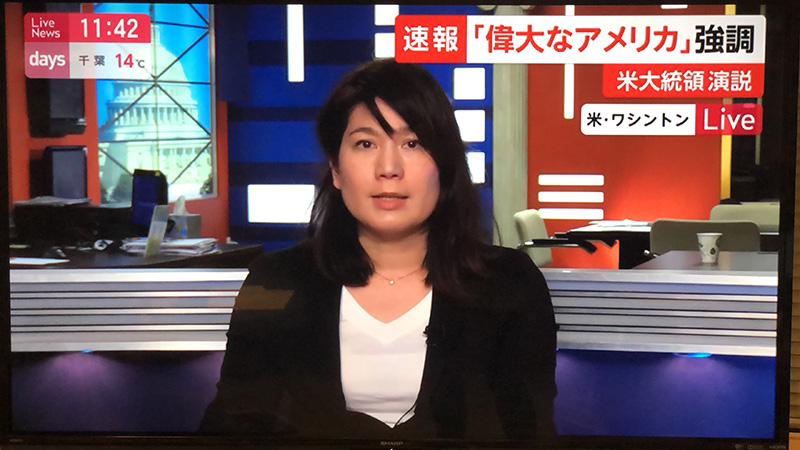
Mizumi Dutcher is a policy researcher and former journalist specializing in Chinese politics, U.S.-China relations, and East Asian strategic affairs. She most recently served as a Foreign Policy Fellow at the U.S. House of Representatives, supporting the East Asia and Pacific Subcommittee. Her journalism career spanned more than two decades at Fuji Television, including service as the Washington Bureau Chief (2018-2022) and an earlier posting in Beijing, where she covered high-level diplomacy and regional security. Mizumi is currently a Doctor of International Affairs (DIA) candidate at Johns Hopkins SAIS. Her dissertation examines China-North Korea relations under Xi Jinping and Kim Jong-un.
(Click on these icons to follow Mizumi: 
 )
)
Podcast
Transcript
Introduction
Hello, everyone. I am excited to welcome today Ms. Mizumi Dutcher, who’s based in Washington, DC. We met through mutual friends. She grew up mostly in Japan, but went back and forth between the U.S. and Japan due to her parents, who’s American and Japanese. She worked as a journalist for a long time, based in China, and then in DC as a foreign correspondent.
She’s now pursuing a doctor of international affairs at Johns Hopkins University, which is so fascinating. So I’m really excited to ask her about her journalism career, her identity, and her work in academia. I’m also excited to ask about her really interesting friendship with a renowned North Korean official.
Thank you so much, Mizumi-san, for joining me today.
Thank you so much for having me. I’m honored to be part of this program.
Childhood and Upbringing
First, may I ask where you were born and raised?
I pretty much grew up in Japan, but was actually born in Honolulu, Hawaii.
My father is an American from Boston, and he grew up in a strict, classic household. My mother is Japanese, from a Buddhist temple family in Chiba prefecture. So they have really different personalities and backgrounds, but they both happened to study at the University of Hawaii. They met there, fell in love, and got married, and I was born there.
But shortly after I was born, we moved to Boston because my father was pursuing a Ph.D. degree at Harvard. From there, we moved to Tokyo, because my dad was studying Japanese literature during the Heian period, and wanted to do more research. (I’m a practical person, so studying literature from 1,000 years ago seems so unreal!)
From Tokyo, we moved to Osaka, and that’s where I was from elementary school all the way to university.
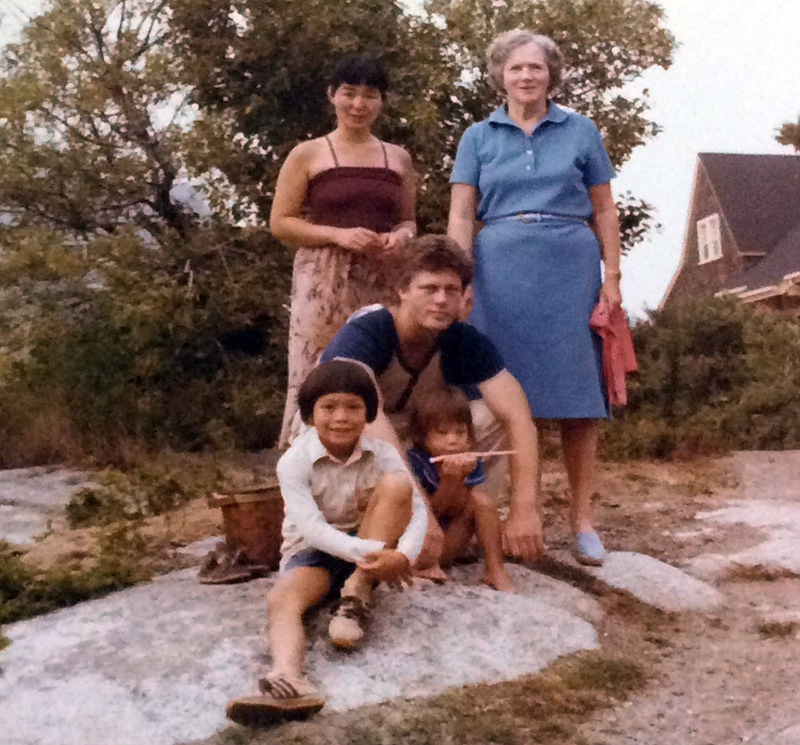
How did you think about your identity as you grew up? I’m sure that it’s hard to recall your days in Boston, but maybe you thought about it while you were in Tokyo and Osaka.
Yeah, before I got into elementary school, we were constantly moving, so I never really thought too much about whether I’m American or Japanese. But there were a few incidents that really made me think about it.
The first incident happened right after I got to Japan and started kindergarten. My mom wanted me to get used to the Japanese culture and environment. I barely spoke any Japanese, but my mom just put me in the [local] kindergarten. One morning she did my hair in pigtails. She sent me off to kindergarten and I came back with one side missing!
We call this the hair chopping incident. My parents were panicking. My mom was like, “What happened to you??” And I was too small and could not really recall what went on. I couldn’t explain myself. So she called up the kindergarten and asked, and found that one of the boys got curious about my hair. It was a little bit different from other kids’ hair and had a bright color. And there weren’t many foreign kids living around the area and going to that kindergarten. So he just thought, “I want to keep this hair” or something, and cut it. I didn’t really feel that I was bullied or anything, but that was the very first realization that I’m different from the kids surrounding me.
There was another time a few years from then. We call this the carrot incident. I was already in elementary school, around maybe nine years old. Roller skating was really popular in Osaka. And I was gliding around my neighborhood on my roller skates. And I used to have carrots as a snack. After school, I’d come back and open the fridge, and there would be a carrot stick my mother had prepared for me.
So I was munching on that while playing with my roller skates, and my neighbor and my friend spotted me. She was shocked and said, “What the hell are eating? Why are you eating a raw carrot? Are you okay? Wouldn’t you get a stomach ache from that?”
Because I was living in the outskirts of Osaka, people may have been a bit conservative, but they thought raw carrots are for animals like horses or rabbits, and that humans eat cooked carrots.
So that was another incident when I felt that the culture and environment I was brought up in is a little bit different from my friend’s.
It was maybe around that time, when I was 10 years old or so, that I started to try very hard to keep a low profile and blend in with my classmates. I got this habit to check around me, see what people are doing, and just follow that. But at the end of the day, my family name is Dutcher, and I don’t have black hair. So I always felt like I’m kind of an outsider, like I’m not really fitting in with my surroundings.
This was also the case when I visited my cousin in the United States. They treat me as the Japanese cousin. I grew up wondering, “Where do I belong? What is my identity?”
That is incredible. I think it’s wonderful that your mom decided to enroll you in a Japanese school because you really get to be immersed in the culture. But I can only imagine how hard it must have been if you didn’t speak Japanese too much and you were suddenly thrust into that environment. And thank you so much for sharing those difficult incidents about your hair and the carrots. That’s something that can have a lasting impact on us.
You said that there weren’t a lot of foreign kids or kids who had ties to other countries around you, but did you have people who you felt still understood you or others that you could open up to?
Yeah, I was lucky enough to have a lot of friends who were curious about me and wanted to be friends with me. Maybe it was because of the place I lived in, which is in the northern part of Osaka called Mino. It’s in the countryside and full of nature, and people had a simple [lifestyle].
So looking back, I didn’t really experience harsh bullying. There were a few incidents, and I felt so different and wanted to blend in, but I was not really forced to do something or experience anything that traumatizes me to this day.
Okay, that’s good. And in terms of language, did you speak English with your father at home, or did you speak exclusively Japanese?
I wish I spoke English at home, but my father loves Japan so much. Our home was full of bonsai and Japanese furniture and all this Japanese stuff. And he insists on talking in Japanese. He just likes Japanese culture. So we were talking 100 % in Japanese at home and outside.
So now I’m struggling. I had to read a lot of literature and history books in English in school. I wish I’d had more English language education.
I think it’s really amazing that you’re pursuing a Ph.D. in the United States now. I’m also fascinated by the fact that your father pursued a Ph.D. in Japanese literature—from the Heian era to boot! As you said earlier, that’s so esoteric and something that not even many Japanese people are really knowledgeable about. I think it’s wonderful. And it makes sense that he wanted to speak Japanese at home.
Interest in China
I want to turn to your career in China. What led you to be interested in China and study Chinese?
My first contact with China was maybe when I was around 10 years old. There was an old Chinese lady living in the same building as us. And she used to visit my mom to have tea and chat with her. Every time she came, she brought two types of candies: a milk candy in a white wrapper that had a rabbit on it, and a peanut butter candy in a yellow wrapper that had a shrimp on it for some reason (I don’t think the candy itself had shrimp in it). They tasted good.
Then after getting into high school, I had the option to choose a second foreign language to study [the first was English], and I chose Chinese. It may be because of this lady and her candies. I always had a good image of China.
Learning this language was kind of eye-opening for me. I had never liked my own name, Mizumi. It’s a beautiful name because it’s written as “water” (mizu) and “beauty” (mi). But if you shift the sound in Japanese, it sounds like mimizu, which means “earthworm.” And I used to get teased about that [as a child]. I know kids just want to have fun, do stupid tricks, and tease people with this stupid stuff. But it kind of stuck with me, and I felt, “Mizumi is not really a common name and I don’t really like it.”
But when I first learned Chinese and read the characters of my name Mizumi in Chinese—“Shuimei” is the Chinese pronunciation— it sounded really beautiful to me. So I wanted to learn and study more about China.
And I started to think, “How about going to a Chinese university after I graduate from high school? I could learn and see a lot in China.” I talked with my parents about my idea, and they were shocked. They said, “What are you talking about? Why are you going to China? We don’t have any relatives or roots there.”
But I was quite determined. I don’t know why, but some part of me thought, “I want to get out of this corner of Osaka and see the world.” So we had a few rounds of talks, and we settled with the plan that I will go to university in Japan, but will focus on China studies and learn the Chinese language. So I went to college in Kyoto and studied Chinese there.
Just a Foreigner
During spring break, I went to China. That was a life-changing experience for me. I was, of course, treated as a foreigner. And that was the first time I felt, “I’m simply a foreigner. I don’t have to try so hard to belong to Japanese culture, or be Japanese or American.” I could feel the weight lift off my shoulders. “I’m just a foreigner–that’s it!” That kind of feeling.
The first time I interacted with local Chinese people talking in Chinese, I was surprised that they were so open in expressing how they felt. I was brought up in Japan, [where we are taught] to hide our emotions, and how letting it out directly is almost rude or embarrassing. So I was thrilled to have Chinese friends and classmates.
I wanted to study more after that, and did a one-year exchange program in China. I became really fluent in Chinese, especially with the Beijing dialect that has an “R” at the end. Over the phone, people couldn’t recognize that I’m foreigner.
Wow! That is incredible. Thank you so much for sharing that. What you said about not having to try so hard to belong is so fascinating. That’s one of the primary reasons I really wanted to talk to you, because I felt like I really needed to find my own identity between the U.S. and Japan as I moved back and forth. To have the motivation to find it outside of those countries [where your roots are] is so interesting.
I also wanted to explore [what happened later]. It’s an interesting situation, because by the time you’ve lived there for so long and speak the language, then you probably start to belong to China as well. Do you consider China a strong part of your identity? How do you feel about it in terms of a sense of belonging? When you visit China now, do you feel like you’ve come home?
Yeah, it’s interesting. I saw totally different aspects of China over the years. I started by just being a student and interacting with friends and regular Chinese people. But afterwards I got into journalism and started to see China from a more political perspective. I had more interaction with the Communist Party and saw some of how they suppress their own citizens.
I really resonate with local Chinese people. I have a lot of Chinese friends, but I feel like I’m a person who’s looking at China. I’m very curious and interested, and I really like Chinese culture, but I always had this position of an observer.
Journalism Career
I see. That’s really interesting. And I’m sure that’s also really helpful in your journalism career.
So I wanted to explore a little bit about how you got into journalism. Would you mind explaining that journey a little bit?
I always wanted to work in journalism, starting from when I was very small. I think it’s because I learned Japanese through television. I used to be glued to the TV and watch cartoons for hours. And eventually I started to think, “Wow, working at a TV station must be really fun and glamorous.” People look good on TV, and I had a [positive] image of them.
After I graduated from university, I wanted to use my Chinese language skills, which I became really good at, and wanted to work in media at the same time. But I totally failed the job hunting process in Japan. It went so bad.
A big part of it is that I just didn’t like the job hunting culture in Japan. Everyone goes to job interviews wearing what’s called a “recruit suit” in Japanese: a black business suit and crisp white shirt. Everyone would dress the same. And my college gave me this pamphlet listing a lot of etiquettes on how you should act during the interview. You have to bow 30 degrees, and you have to put your hands together in the front, etc.
My gosh!
All this stuff made me think, “Wow, this is not me. I cannot do this.” By the time I graduated, I didn’t have any job offers and I really had to think what I’m going to do with my life. So I decided to change my plans and flip the script. Instead of searching for jobs in Japan, I could go to China first, and if I get a job in media, that would fulfill my dream. I can be in media while using the Chinese language.
So I just went to Beijing, and luckily the Beijing Bureau of Fuji Television was looking for a researcher. And that’s how I got into TV. And I pitched myself by saying that I’m really tough, I can do a stakeout for long hours, and I’m really good at Chinese and energetic. The culture at Fuji Television was really open, and I’m really grateful for that. They accepted me even though I came out of nowhere, and they let me try all different kinds of things.
Eventually I was hired by the headquarters, and I worked for Fuji Television for a total of 20 years. I was in Beijing for around six years, from 2006 to 2012.
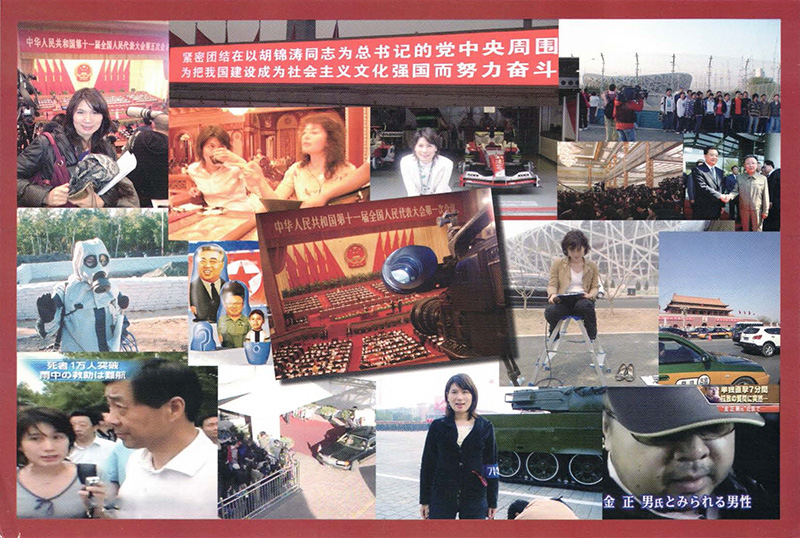
You mentioned how, as a journalist [in Beijing], you worked with more of the political side of China, having to talk to the CCP and things like that. But China has a reputation for controlling the press. Was it somewhat easier for foreign media outlets [compared to domestic ones]? What kind of obstacles did you have in terms of the control that the CCP wanted to exert?
Yeah, I got a very different perspective on China after I joined Fuji Television because of the interaction with a lot of government officials.
One assignment that really left a strong impression on me was the Sichuan Earthquake back in 2008. We were sent to the epicenter and got to this village nearby. We noticed that there was a high death toll of small kids. All the parents had survived, and only their children were killed by the earthquake.
We started to look into why this was the case. Then we noticed that most kindergartens and elementary schools were totally flattened and had turned into rubble. And all the office buildings and housing were okay. And we kept getting the same explanation from local people, that this is doufuzha gongcheng, which means “tofu construction.” And it was obvious from the rubble. They were using very thin steel bars and there weren’t enough rebars. And they weren’t meeting the safety code.
After digging further, we found that the local constructor and the local government were totally corrupt. The constructor was giving bribes to get this deal. And people found out and the parents were furious. Day after day, they would go to the local government and do a protest. And they were basically dragged away by the police.
None of the Chinese media was reporting about it. And I thought that this is something foreign media really have to report, hoping that this gets onto the internet and Chinese local people can see it. That was the first time I saw what it’s like to live under the one-party policy without any freedom of speech.
Foreign media were monitored, too. We didn’t have more freedom than Chinese media. Well, we could report on some things that Chinese media wouldn’t be able to broadcast. But we were closely monitored.
My phone used to get jammed. One time, when I was talking with colleagues at the Fuji TV headquarters in Tokyo, I could hear Chinese conversations in the background. There was a third party in our two-person call.
I was doing a lot of interviews with human rights groups and North Korean defectors. I was a little worried that I might bring some risk to those people. So when I went back to Japan for a business trip, I got these detectors to check for bugs and listening devices inside my Chinese apartment. And I found two.
What? That’s crazy!
Yeah. The detector reacted to the bugs. One of them was in my bedroom curtain rail. Another one was in the corner of my living room. So I quickly met with a friend from the Japanese embassy based in Beijing, told them about the bugs, and asked for help to remove them.
To my surprise, I was told to just leave them be. Because now I knew where the bugs are. If I remove the bugs, the CCP has other ways or more advanced techniques to plant new ones. And if I leave them be, I would know where not to talk about sensitive stuff. So I lived with these bugs for two years.
My god. That is incredible. I just cannot imagine. Someone planted the bugs while you were away, which I’m sure is creepy. And one was in your bedroom, where you sleep! I think working in places like that adds another layer of stress, and you need to be mentally tough to deal with it.
But that Sichuan story that you mentioned—was that broadcast without any interference from the Chinese government?
Yes, there’s no problem broadcasting in Japan. But if there’s a way to broadcast in China, I’m sure they will cut it. Sometimes we had interference transmitting back to Japan. They would cut the satellite line we were using to transmit. Or if we’re reporting live, they will cut it if we say something really critical of the CCP.
I see. Oh my gosh.
Reporting in the U.S.
Related to that, I also wanted to ask about what’s going on in the U.S. right now in terms of freedom of press and freedom of speech. Things are getting more difficult. Freedom of speech in terms of what’s happening in the comedy and talk show realm, and freedom of press too, like The New York Times getting sued, or the Pentagon restricting journalists that can come in. The journalist visa [for foreign correspondents] might also get shortened.
China and the U.S. are very different, but from your experience in China, would you have any advice for U.S.-based journalists? How can they continue to report on the government, including things that might be critical of them, in this difficult environment?
Yeah, I’ve seen the media coverage and talked to my friend in media based in the U.S. They’re really concerned about the proposed 240-day limit of the “I Visa,” which is the visa for foreign journalists. Currently the limit is five years, and it’s perfect for all the foreign journalists to cover American politics because the presidential election cycle is four years, and you need to cover midterm elections as well. That’s the main thing we do here.
So if the visa is only valid for eight months, journalists might rethink whether they should be harsh [in their criticism of] U.S. policies. This is not a healthy way of thinking for journalists. You have to have a good relationship with the federal government and White House. And to do that, you need a visa that’s valid for a longer period.
It reminds me a little bit of China. Of course, things are different between China and the U.S., but China also has a press visa, which is valid for a year. In China, if journalists are too critical of the CCP, the visa was always the leverage to control the media. I know the U.S. and China are different, and America is a country that values free speech. But I feel a little worried how this is going to develop.
I see. So after working in Beijing, you worked in DC as the DC Bureau Chief, which is incredible. I think you straddled two different administrations while working from 2018 to 2022. Are there any stories that you’re particularly proud of during your time in DC?
I felt very fortunate to be here at this important time. Being the DC Bureau Chief is like a dream position for all Japanese reporters. I was able to cover the last two years of President Trump’s first term and the first two years of President Biden’s administration. I covered COVID, Black Lives Matter, the elections, and the withdrawal from Afghanistan. These were all very pivotal events.
And if I hadn’t been here, I probably wouldn’t have noticed how much the American people were in pain. A lot of people lost their daughters and sons in wars. And the middle class has been hurt by globalization over the past 10 years. A lot of industry moved out of the country, and many people in the middle class are losing their jobs. That’s something I didn’t know about when I was in Japan.
I was just listening [to Americans I interviewed] and there’s so much hatred coming to the surface. I needed to understand why and where this was coming from. I’m starting to understand that maybe this is the voice of those who had been forgotten. They were not being heard for such a long time. This voice is emerging, and it’s not really ending at the edge of America. It’s changing the U.S. policy towards Japan and a lot of other stuff. I feel like I’m here at a time when critical changes are happening in the U.S. and the U.S.-Japan alliance. And I’m learning every day.
Okay, thank you.
Friendship with Kim Jong-nam
I want to shift gears a little bit and ask about your transition into academia. I understand that one of the biggest motivations [for you to go into academia] is what happened to Kim Jong-nam and your friendship with him. Would you mind explaining a little bit of that journey?
I first interviewed Kim Jong-nam back in 2007 in Beijing. I don’t think a lot of people know about Kim Jong-nam, but he is the half-brother of Kim Jong-un, the current leader of North Korea, and he’s the eldest son of Kim Jong-il, who was the leader before.
Back then, Japanese people were very curious about North Korea. They wanted to know why North Korea is flying missiles over Japan and abducting regular Japanese citizens and taking them to North Korea. There was a lot of crazy stuff going on. Kim Jong-il, who was the leader of North Korea, was having health issues, and we were starting to talk about who’s going to be the next leader.
But we didn’t know where [Kim Jong-nam] lived and where to look for him. Everyone wanted to interview him because he was the eldest son and could be a good candidate to succeed the North Korean regime.
And one day in 2007, a reporter from Japan was vacationing in Macau, which is in the southern part of China. And he just bumped into Kim Jong-nam on the street. He took a picture and did a really brief interview. And that was put on a newspaper.
After that, every Japanese journalist flew into Macau. Macau is tiny, with just one-tenth of the area of Washington, DC. But around 100 Japanese journalists were there looking for him. It was like a real-life Where’s Waldo? So we were there for a week, going to hotels, casinos, and shopping malls just looking for him. Of course, it’s not that easy. We couldn’t find him. And most journalists gave up and left.
I also went back to Beijing. But one guy, my colleague from Fuji TV, stubbornly stayed there, and around a month later, he spotted Kim getting on an airplane flying to Beijing. So he called and said, “I just spotted him getting into the plane, so be prepared and wait for him in Beijing.”
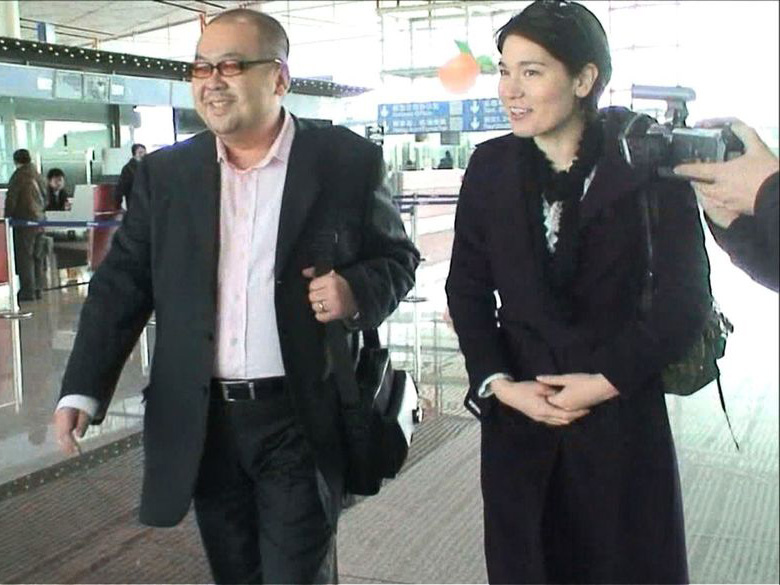
And that’s how I first interviewed him. We only talked for seven or eight minutes, but the impression I got was that he was really polite and kind of confident. If journalists are on a stakeout waiting for you and there are cameras, most people want to run away. But he was very calm and didn’t seem scared of journalists. He spoke pretty good English, too.
And from there, we gradually built up our relationship. It lasted 10 years. We had exchanged emails and SMS messages. Yeah, so that’s how I started and we had 10 years back and forth exchange.
When you and I were preparing for this [podcast interview], you mentioned that you recognized in Kim Jong-nam a sense of loneliness that was familiar to you, and that it probably came from growing up in different countries and going back and forth. And for him, it was even more acute because he couldn’t really be in North Korea. Would you mind explaining a little bit about the rapport that you built with him?
Yeah. After I did the first interview back in 2007, I still couldn’t find where he lived.
We became really close after 2009. I found where he lives in Macau and staked out at his apartment. He was worried that I would broadcast where he lives. I didn’t mean to intimidate him or use this knowledge, but we came to a deal. I said, “I will never [broadcast where you live]. That’s not my intention, and I will keep your privacy. I just want the chance to get to know you more and understand North Korea.”
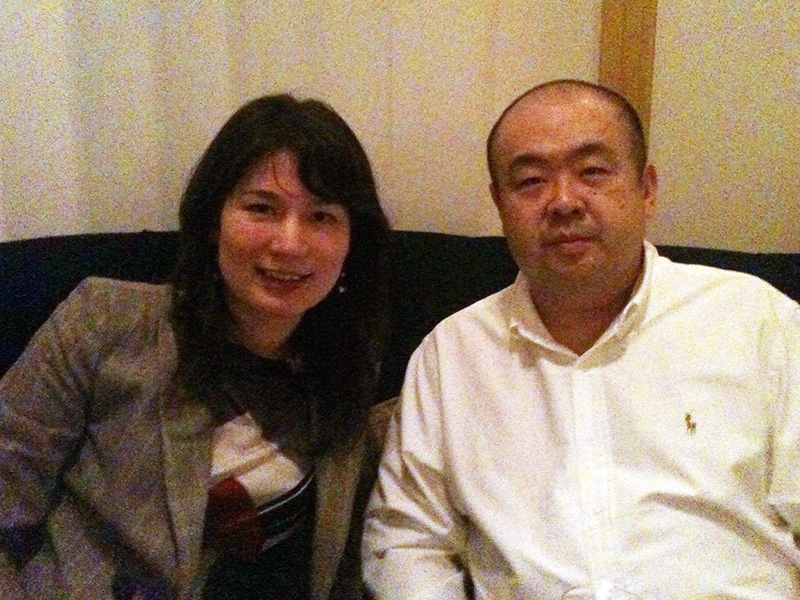
So we made a deal to meet off the record. We would have tea or dinner together like friends and just talk about day-to-day stuff. That’s when I started to know him more personally. He shared his upbringing and his life journey with me.
When he was nine years old, he moved to Switzerland to get his education there. After that, he went to Russia for high school. By the time he went back to North Korea, he was in his late teens, almost an adult. And he just didn’t really fit in. He couldn’t even eat kimchi. It was too spicy for him. He was like a totally different person [compared to when he left].
He wasn’t really an ordinary North Korean. So he seemed to really struggle with where he should put himself. And that felt quite similar to my situation. So he started to really trust me. I introduced my mom to him, and we had dinner together. He also introduced his son and daughter to me. We became really good friends and talked a lot about different issues.
Wow! That is so wonderful.
I can only imagine how shocking and terrible it must have been to lose him [when he was assassinated]. What was your last exchange with him? What was it like hearing about it?
He was assassinated in Malaysia, at the Kuala Lumpur International Airport, in 2017. He was just about to board a plane and go back to Macau, where his family is. It was just an ordinary trip for him.
But he was suddenly approached by two women. They smeared a liquid on his face. These two ladies were tricked by North Korean intelligence and thought this was just a prank. But actually, they were putting on him a toxic agent called VX, which is one of the most dangerous substances in the world. Kim Jong-nam’s organs started to shut down, and he couldn’t even make it to the hospital. He died in the ambulance.
I first heard about it through a phone call from the Fuji TV headquarters. I was in Japan covering Japanese domestic politics.
And my colleague was telling me, “South Korean media just reported that a man who looks like Kim Jong-nam was killed in Kuala Lumpur.” That was the evening of Valentine’s Day and the day after the assassination. I called him on WhatsApp and tried to get a hold of him, hoping that [the man in the media reports] wasn’t him. I heard the phone ringing but no one picked up, and I frantically sent short messages but they never got read.
The last exchange I had with him was a month prior to the assassination. We exchanged messages of greetings for New Year’s, and that was the very last time I heard from him.
I’m so sorry. I’m sure he really appreciated your friendship. There must’ve been very few people around him that he could truly trust. I’m sure that he, too, felt a sense of camaraderie with you, because growing up in multiple cultures, you have identities [that are different from others]. Thank you so much for sharing that.
Transition into Academia
Would you mind explaining your transition into academia? I understand that your research topic is very much related to Kim Jong-nam and the circumstances surrounding his death.
Yes. I’m currently pursuing a doctoral degree at the School of Advanced International Studies (SAIS) at Johns Hopkins. I started last year and I’m using Kim Jong-nam as a case study. I think this is a really unique case study, because I have firsthand resources of the emails we exchanged and the memo I made after the interview. I thought I might be able to use this perspective to really understand how he was treated in China and the relationship between China and North Korea.
And just recently, we saw photos of Xi Jinping inspecting the Chinese army at a military parade, standing alongside Putin and Kim Jong-un. So people might wonder, “What’s going on with these three countries?” And I’m hoping this paper could shed a little bit of light on the real relationship between North Korea and China, as well as with Russia.
Why did you decide to pursue your studies in the U.S., as opposed to other countries?
Well, I happened to already be here [in the U.S.]. Towards the end of my career as the DC Bureau Chief, I was feeling more uncertain as things were shifting so fast. I felt like I didn’t have a center or core, even though this is a time when you really have to have something to hold onto. I needed to really dig into something that’s not moving.
Being in media, your job is to cover stories every day. Things keep changing and you have to [constantly] catch up. So I needed to stop a little bit, take a step back and see what’s going on, and dig into something and try to center myself.
It’s so courageous of you to go into a different career now. What paths are you interested in after you graduate? Do you have any plans at this time?
When I quit my job in Fuji Television, everyone thought I was crazy. I had climbed the ladder and got this great job as a DC bureau chief. All my friends were saying, “You’re ruining your life. What are you doing?”
But after I started my journey in academia, I started to see a new path that opened the door to a lot of new opportunities, and I’m pretty grateful for that.
After my doctor degree, I want to focus on the U.S.-China relationship because those are the two elements I have. I lived and worked in China and the U.S. So I’m hoping to research and analyze how this relationship will evolve in the future.
So I will probably look for a job in the U.S. I hear a lot of anxious reports now about the job market, but I will try to stay optimistic and search for jobs after graduation.
I think you will be so popular because you’re so thoroughly knowledgeable about China, Japan, and the U.S.—and even North Korea! The fact that you’re fluent in Japanese and Chinese makes you such a strong [candidate].
An Extra Antenna
You’ve been in the US for a while now, and you mentioned how you’d like to stay here. Do you think the American part of your identity has changed now that you’ve lived here for a while [as an adult]?
This is my seventh year in the U.S., and I’m definitely regaining my connection with American culture. I pretty much grew up in Japan, and had previously only visited the U.S. for a very short time celebrating Thanksgiving and American-style Christmas with my cousin.
But lately, I don’t really think about identity anymore. I feel like I’ve been living in so many cultures that I don’t know anymore. Of course, my comfort food is Japanese food, and I have my American dad. So I think both cultures are rooted inside of me.
Great! Not thinking about your identity too much anymore—I think that’s the best answer. Because when we have to think about identity, it means that we’re kind of uncomfortable where we are, and we’re having to wonder, “Am I in the right environment? What is the happiest environment for me?” and things like that. So I think it’s so wonderful that you’re not debating that anymore. You seem to be really at home now, which is great.
Would you have any advice for others who might be struggling with their identity or facing difficult life choices?
Growing up with a multicultural background is definitely challenging, because you always feel like you don’t belong anywhere. There was definitely a point in my life when I felt so lonely and that no one would understand me.
But it also actually becomes an asset. I got this skill to read the room or read into people’s thinking. That was a skill I needed to survive, but it became a great asset for me in journalism. Every time I do an interview, I would look into the person maybe a little bit deeper than others do. So I was always able to pull out some [good] stuff, and I thought, “This is definitely coming from my upbringing with multiple cultures.” So you should think of this not as a burden, but as an asset—kind of an extra antenna that you can use.
I love the idea that it’s an extra antenna—that’s awesome!
Be Honest with Yourself
How about people who are thinking about a second career or transitioning into a completely different field, but are hesitant because they’ve built up and invested so much in their previous career? I’m sure that they’re worried. Would you have any advice to encourage people to pursue their dreams in a different field?
Well, as I said, [when I quit] after building up all this career in media, people thought I’m crazy. But you only live once, you know?
And I come from the belief that I don’t want to have regrets. Maybe it comes from covering Kim Jong-nam, who was assassinated, and visiting the epicenter of the Sichuan Earthquake. You never know what’s going to happen. People were living happily, but in just one day, everything is wiped out, turning into rubble. That could happen to anyone, so you should just be honest with yourself. Listen to your heart and pursue what you should do. I don’t regret it.
It’s definitely difficult. I quit my job and got into academia in my 40s. I’m surrounded by students in their 20s. They seem to act more quickly than me, and sometimes I feel, “My gosh, I’m so old and tired.” But I think what is important is to be honest with yourself. Of course, I have down days when I feel useless and just want to curl up and lie on the bed for hours. I’ve gone through many days like that. The most important thing is to be kind to yourself. It’s okay; you’re a human being. Even if you have down days, be kind to yourself, be honest with yourself, and don’t let age or fear hold you back.
This is true especially now, when things are shifting so fast. You never know what you’re going to do next year. You don’t know how the economy [will change] a few months from now. So many things are uncertain. And in this kind of environment, just staying [as you are] and being protective is a bigger risk. So I want to encourage others: if you feel strongly about something, just go for it.
That was incredibly powerful. “You only live once” is something we say often, but it feels so real coming from you, who’s seen people pass away just like that. We really have to think about our long-term dreams. And what you said about how it’s a bigger risk now to just stay in the status quo—that really resonated with me, and I’m sure it will for a lot of other people as well.
I think that covered everything that I wanted to ask, but is there anything you’d like to add?
I just want to be of help to others who are struggling, because I’ve gone through that, and still am. Trying something new is always a struggle. I just hope my experience will be some sort of help to others. That would be the happiest [outcome] for me.
Thank you so much, Mizumi-san. I really appreciate the opportunity [to talk with you].
Yeah, thank you so much.