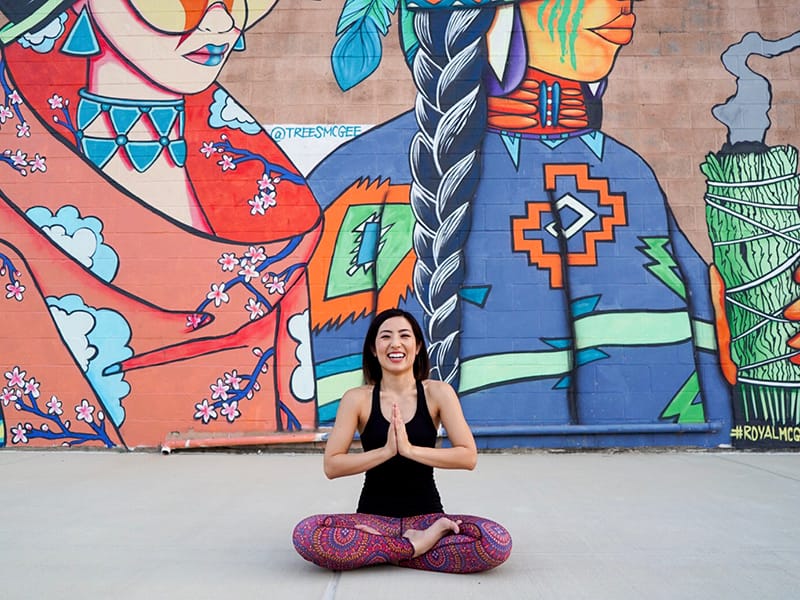
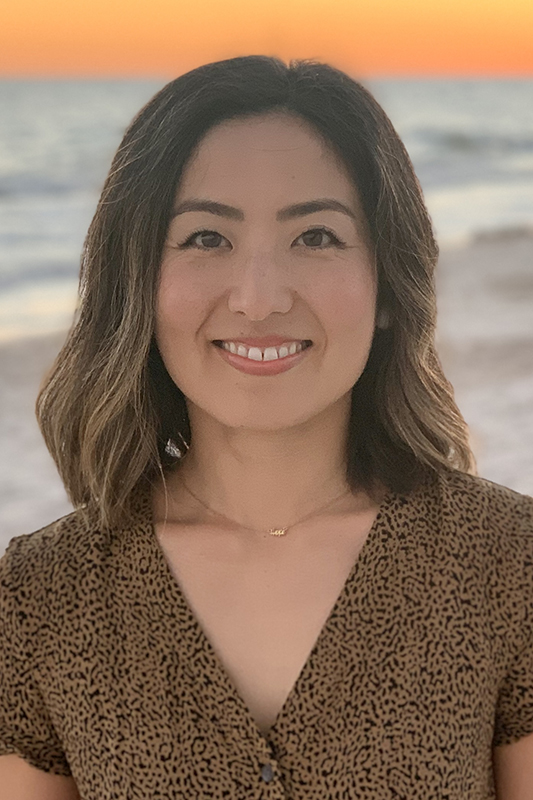
Kuriko Wong is a certified coach and the founder of Confidently Clear, a coaching practice helping leaders and mid-career professionals clarify their vision and take confident action toward their own definition of success. With her 20-year international career in public relations and communications at some of the world’s biggest corporations, she has worked with dozens of global professionals to find new perspectives, meaning and progress in their work and life. Kuriko is also a yoga instructor, social science aficionado, perpetual language learner, and active cyclist. She is based in Houston, Texas. She can be reached at confidentlyclear.com.
(Click on these icons to follow Kuriko: 

 )
)
Podcast
Transcript
Introduction
Hello, everyone. I’m excited to welcome today Ms. Kuriko Wong. Kuriko is a great communications expert who I met through the U.S.-Japan Council. I admire her so much because she’s incredibly well-spoken. She grew up in Japan and came to the U.S. when she was 16 years old. I’m blown away by how she’s built such an amazing career in such a language-intensive field.
She’s recently transitioned careers into coaching and is especially focused on building confidence in her clients. I’m looking forward to talking with her today about her upbringing and identity, her incredible language skills and career in communications, and her passion for coaching.
Thank you so much, Kuriko, for joining me today.
Thanks, Shiori, for having me.
Childhood and Upbringing
First, where were you born and raised?
I was born in Hamamatsu, Japan. Hamamatsu is in Shizuoka Prefecture where Mount Fuji is. I like to describe it as the midpoint between Tokyo and Osaka on the Shinkansen bullet train line. If you’ve ever been from Tokyo to Kyoto or Osaka, you’ve passed through Hamamatsu.
That’s great. I had the opportunity to visit Hamamatsu a few years ago.
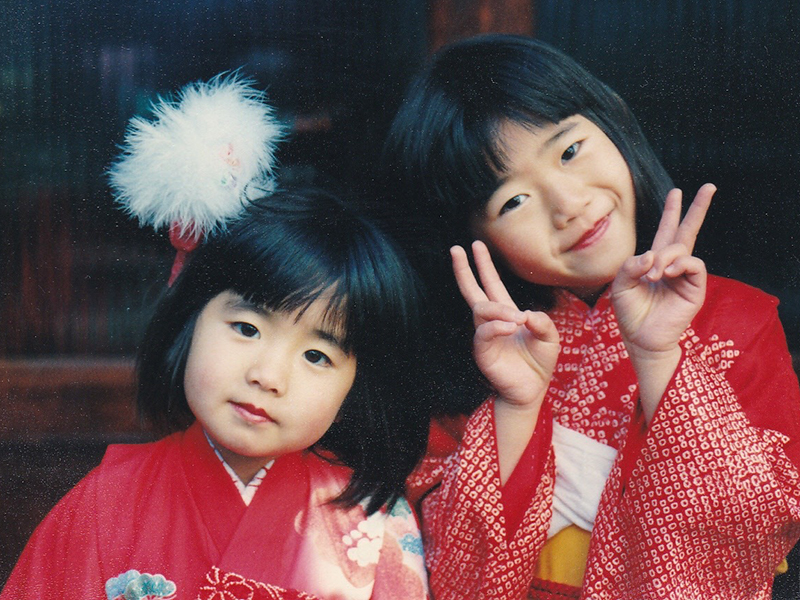
Have you always been interested in the U.S. or foreign cultures and languages? Or is that something that you happened to fall into?
That’s a really good question. I grew up as a pretty ordinary Japanese girl in a regional city that many people in the U.S. have not heard of. So I wasn’t raised in a particularly multicultural environment.
When I was 13 and got into junior high school, I started taking English as a required course. I wasn’t good at it at first. I actually probably got one of the worst grades in the class. I was struggling.
But I was fortunate enough to meet this juku (cram school) teacher. And she taught me in a way that I could clearly understand. Thanks to her, I went from a poor performer to top of the class when it came to English. And that incited my passion for learning this language. I really wanted to learn as much as I could, and I was eager to master the language.
Hamamatsu is known for a lot of industrial factories and businesses like Suzuki, Honda, and Yamaha. There is some foreign culture, such as workers that come from other countries like Brazil. But other than that, I grew up in a monocultural environment and my family wasn’t particularly international.
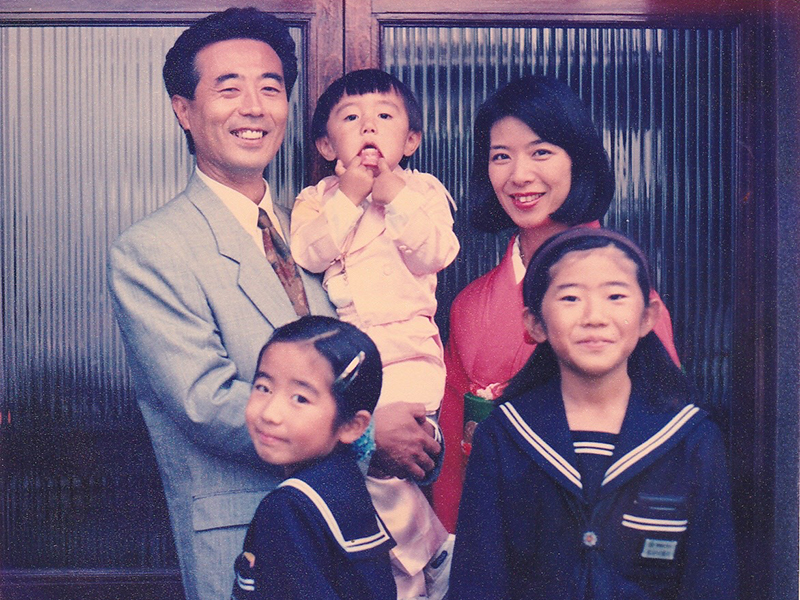
Determined to Study Abroad
So how did you end up coming to the U.S. when you were 16?
It’s a little random—or to use a fancier expression, it was because of a chance encounter. As I said, I was really eager to learn English, and when I was 14, I read this magazine article that pretty much transformed the trajectory of my life.
I read about this Japanese girl who was studying abroad in high school in the United States. I was surprised and envious [to read] that she was watching Hollywood movies in English without subtitles. I knew then and there that I wanted to do the same thing. That’s how I ended up choosing a high school that would allow me to study abroad for a year.
So when I was 16, I went to Upstate New York to live with an American family and go to a local high school in this small town called Canton, New York. But it didn’t have to be the U.S., actually. Through this exchange program, which is called AFS, I could have gone to other places. In fact, I was supposed to go to Finland for a year and somehow learn Finnish—which now sounds quite difficult!
But with 9/11 happening just months before I went to the U.S., a lot of people decided not to pursue it anymore. And that created an opening for me to go to the U.S. That was just by chance. And to be in New York of all places—that sounded a little scary, I’m sure most of all to my parents, just months after 9/11.
It’s incredible that so many different forces came into play and you just happened to end up in the U.S. Had you already started studying Finnish?
I had not. Before I could obtain a very rare Finnish textbook, my trajectory shifted to the U.S. So I ended up not learning Finnish and didn’t find out just how difficult it might be.
That’s a really tough [age] to go to a foreign country. I think people who do that have so much courage because high school is already a difficult period to begin with. Everyone is going through their teenage years. You’re feeling awkward. Your body is changing. Your emotions are changing. Did you have any difficulty fitting in at the beginning in New York? And if so, how did you overcome that?
Yeah, I had difficulty fitting in for sure, especially because I was this foreign person in a small town where seemingly everybody grew up together. I was also one of the very few non-white minority people. So I was culturally very different.
It’s funny that people say, “You’re so brave.” I think being courageous means you act despite your fears.
In my case, I was more fearless. I wasn’t scared because I was just so determined. I wanted to do this. I wanted to maximize this year. I wanted to master this language. A friend of mine described me the other day, “You’re a determined person.” I am very determined. I was just very hyper-focused [back then]. So I wasn’t brave.
Of course, if you enter a high school where everybody else grew up together but you, regardless of whether you’re a foreign exchange student, it’s hard to make friends. But I was just busy trying to maximize the year. I joined all the clubs I could. I did lacrosse, I did dance, I did choir. I joined the announcement club and was reading the lunch menu even though English was not my first language. I did everything I could get my hands on and tried to make the most of it.
During that time, I also stopped speaking Japanese because I was so focused. I didn’t want to distract myself. I stopped speaking Japanese except for the very occasional phone calls that I had with my parents. I journaled in English, and I [felt safe with] my host parents and my host brother, who gave me even more experiences at home.
So yes, it was hard. I had to read American history books that were very thick. I was overwhelmed—there’s no doubt about it. But when you focus on something, everything else fades into the background.
That is incredible. I admire you so much, especially how you joined every club you could, including sports. As an introvert, I have a hard time imagining doing that. It’s already difficult for me to put myself out there, and I can’t imagine joining all these clubs in a foreign language. I’m blown away.
I admire you for your qualities. We’re quite different. We share the same industry and profession, but you have your strengths and I have mine, and they show up differently.
Attending College in Houston
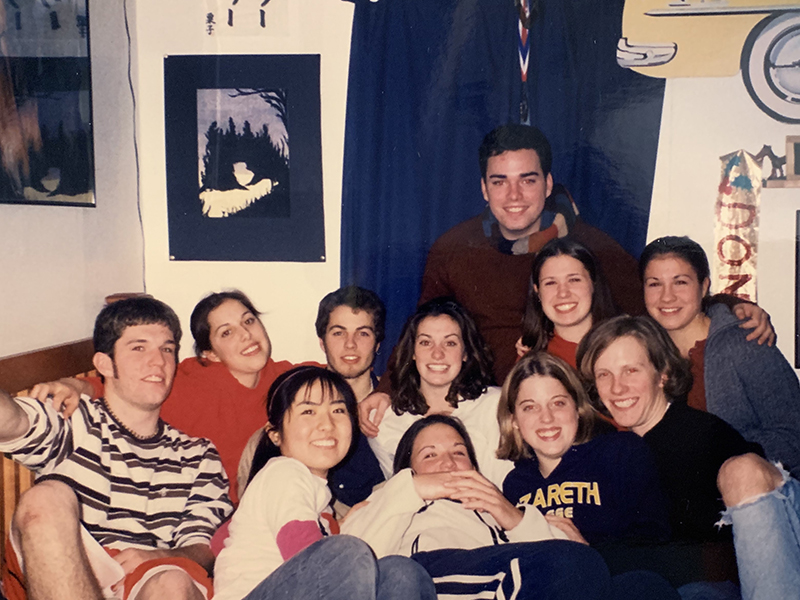
You said that you studied abroad for a year. So you went back to Japan, graduated high school, and came back to college in the U.S.?
That’s right. One of the key criteria that I was looking for in a university or the city that I would live in was that it would be warm. That’s because it was really cold when I lived in upstate New York, and I just don’t like the cold. Also, importantly, if I were going to be independent and on my own, I had to live somewhere that I didn’t need to drive in the snow, which I didn’t know how to do. So warmth was important.
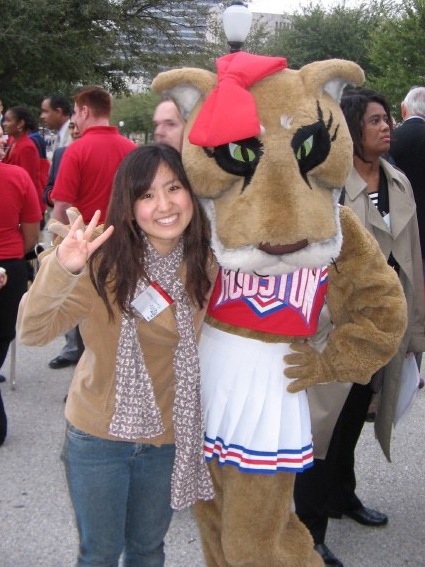
I chose the University of Houston because It’s also in a big city. That was the other criterion.
Well, it turns out I was a little misguided. I didn’t have a guidance counselor. I was on princetonreview.com every night figuring out what school I wanted to go to. I was just doing this on my own, and I had no idea. In the United States, just because a city is big doesn’t mean it comes with public transportation and no need for driving. I definitely have to drive in Houston.
I also chose Houston because it was affordable. And the university had a lot of different majors. If I wanted to change majors, I could do so without having to transfer. I was also attracted to the diversity of the university and the city.
Why did you decide to major in public relations and communications?
When I got into the University of Houston, I had to choose a major just from the get-go. It’s funny when you think about our careers. Many of us decide what to do, often uninformed, at the age of 17 or 18, right?
That was very much the case for me because I just thought, “Oh, I love communicating. Let me major in communications.” That was the extent of my consideration in terms of choosing communications. It just worked out because it suited my personality in many ways.
And I met this wonderful friend, who was a graduate student at the University of Houston and focusing on public relations (PR). I learned more about public relations and said, “Oh that sounds cool; I think I might do that.” So this was another chance encounter that made me curious to try that path. I pursued it for the last 20 years so clearly it was a good enough fit for me.
As you said, it is a language-intensive path. So I was not good at writing at first, but I wrote a lot, and over time I became better. In my 20s, I also used to get feedback from my bosses that I was lacking strategic thinking. But even then, after enough practice, I was told, “You are one of the most strategic people.” So we can learn things.
A Multilingual Friendship
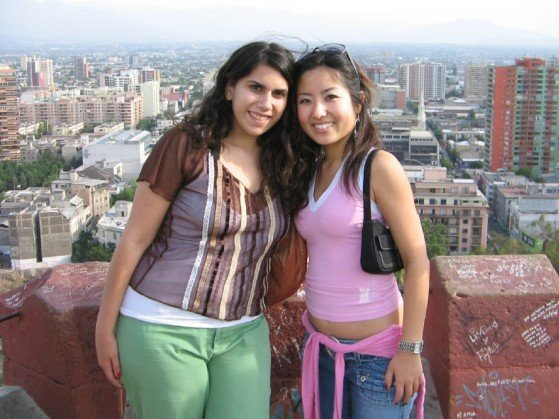
I’d like to ask more about your public relations career. But before we go on, I want to come back to your college experience, because your other major was in Spanish. And you studied abroad in Chile and Mexico. I understand that you had a prior connection with your host sister in Chile. Would you mind explaining a little bit about that?
Sure. I love telling this story. After I spent a year in upstate New York, my family in Japan hosted a student from Chile for one year. This was through the same AFS exchange program, and I was in my last year in high school. My host sister, Poli, went to a local Japanese high school: a Catholic school for girls. I didn’t go to her school, but we were both basically seniors in high school at the same time.
In college, I decided to take an elective and learn Spanish because I quickly realized that it was commonly spoken in Houston. I had an interest in languages. This was the third language that I would try. And I loved it. I really enjoyed learning it, and I wanted to communicate and connect with more people. So then I decided, “Well, why don’t I study abroad?” Because that is the best way to learn language and really get better at it. There was no better place than going to Chile and be with Poli’s family in Santiago. That’s how we ended up [studying together again].
Poli and I are still really good friends and sisters. we’ve been to each other’s weddings and been on trips together. We talk regularly on the phone. I’m planning to go see her later this year as well in Chile.
That’s so wonderful. You have this incredible friendship that’s spanned decades. And you’re both trilingual.
She and I are on our fourth language. I’m learning French right now and she’s learned it a little bit. So we can speak in four languages. We can code switch all we want, and we’re the only people that we know of that can speak all those languages together.
My gosh. That’s really cool.
Career in Communications and Public Relations
Going back to your communications and PR career, I understand that one of your first jobs in communications full-time was at Moody Gardens. I looked it up and I found that it was an amusement park, which sounds like a really fun job. Would you mind talking a little bit about your PR experience there?
I graduated from college in 2008 just after the financial crisis. So the job market was very tight. Starting out in PR was pretty challenging. I had the fortune of finding a job in Galveston, Texas, where Moody Gardens is located. It’s about an hour outside of Houston. I made this tough 62-mile commute each way—so 120 miles each day. That’s part of paying the dues as an entry-level PR person.
Moody Gardens is a multicomplex with a golf course, hotel, resort, museums, movie theaters—everything in one place. I scored a PR job there right out of college, which is remarkable, in retrospect, especially after the financial crisis. I served as a spokesperson for Moody Gardens in English and Spanish. One of the reasons I was able to get a job there was because I spoke Spanish. So [learning Spanish] really did serve me.
And yeah, it was a fun job. I hung out with penguins—how cool is that? My memory from this first job is often getting on the road and going to different cities around Texas and Louisiana to promote Moody Gardens. I would go on the road with a biologist and an animal. It could be a bird, it could be a snake. That’s my memory of Moody Gardens for the first two years of my career.
That sounds really fun! After that, I understand you went to FleishmanHillard, which is one of the premier communications PR firms in the world. I’m sure it was a big transition going to a large global company. And you were now in a full-time PR firm, which has many different clients. How was that transition?
I actually had the fortune of interning there during my senior year of college. And then I went to Moody Gardens for two years and then returned to FleishmanHillard when the market opened up a little bit and staffing needs increased.
One of the reasons I was able to get the college internship in the first place was because the Houston office of FleishmanHillard was doing a lot of multicultural work for clients like AT&T. They were using multiple Asian languages to gain cultural understanding. They were also using Spanish to understand the needs and wants of Latin American clients. So that was my way into this very big PR agency, and I was very lucky to be able to do that.
I spent about eight years total at FleishmanHillard. It was a great place for me to learn and be inducted into the world of multi-disciplined communications. It felt like getting a degree in communications, because I got to work on brands that we all know. I worked with AT&T, Chevy, and Rice University here in Houston. I also got to work on all sorts of different communications disciplines. So that really gave me a good firm foundation of what communications could be like.
Then I snagged an opportunity to work out of the FleishmanHillard office of Hong Kong for two months. And towards the end of my career there, I worked on and led the account of Mitsubishi Heavy Industries, which felt really special for me. From my understanding, I was the only U.S.-based FleishmanHillard employee that spoke Japanese and also understood the American business environment and the culture. And I was able to help a Japanese company—which everybody knows in Japan—expand not just to the U.S., but to the global market. My father, who’s still based in Japan, was proud of me and excited that his daughter was working on an account for a company that he recognized and appreciated the value of.
That is incredible. I’m sure that the people at Mitsubishi Heavy really appreciated you because this was a rare opportunity where they happened to find someone who is not only an expert in their field, but is also fluent in both languages.
I remember when I first met you, I think you were working at FleishmanHillard and you were vice president at the time. I was just amazed, because here is someone who’s in their late 20s or early 30s, already a vice president at this huge global communications firm, and she learned English afterwards. I was like, “My God, who is this person? I would love to get to know her.” So I’m really excited that I get to interview you today.
Anyway, you said that there was a lot of variety [in your work at FleishmanHillard], which sounds really exciting. But after that, you went back to becoming an in-house communications expert at Accenture and Tata. Did you feel more comfortable working in-house and focusing on one company? What was the reasoning behind that transition?
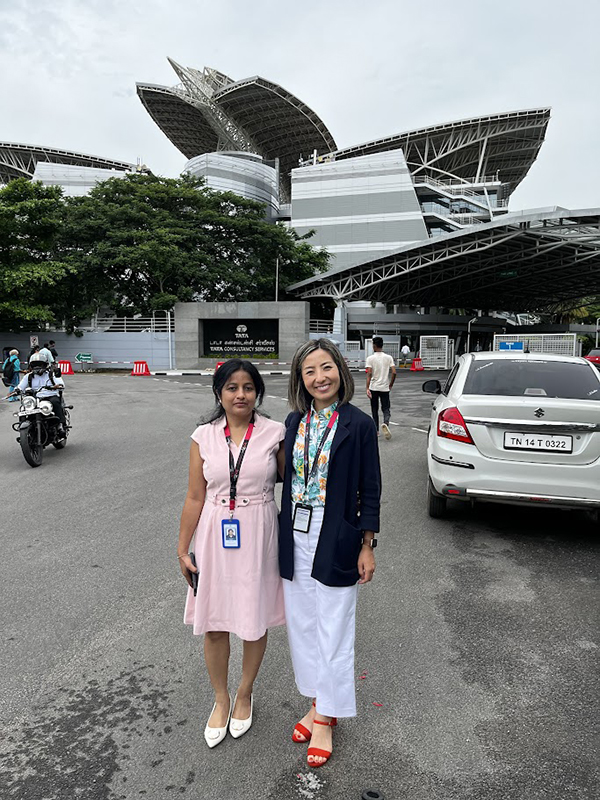
I think we go through different phases of our career and our life. It felt right to go into an in-house role at that time. I was in my early 30s, and I loved being able to represent one brand. I loved the variety in my 20s, but I also loved being able to focus and get to know a particular brand deeply.
I also loved that these two companies, Accenture and Tata Consultancy Services, were both very global. FleishmanHillard was global too, and I was able to do some international work, especially towards the end of my career [at the company]. But I knew that was something that I was really eager to do. These two companies that I got to work for in my 30s were both very global, and being able to work with colleagues from around the world on a daily basis really excited me.
I think neither is better in terms of focusing in-house or being in an agency environment. I think we have different phases, and they have different ways of serving you at different times of our lives.
That makes sense.
Shifting to a Career in Coaching
After that, you decided to transition into coaching. What was the incentive to go into a completely different field? And what are you doing now [in terms of coaching]?
Haha, “What was the incentive? Why would you do that?”
No, I’m sorry. That’s not what I meant! What was the motivation?
Haha no, that’s a good question. I guess I couldn’t help but do it. Here I was, leaving a 20-year career where I seemed to be successful.
I think a few things happened. One is, I had a coach for myself to navigate these gigantic global organizations, and I personally benefited from having a coach. It really changed the way I showed up at work, managed up, and started to see myself as a leader. So I knew coaching was very impactful and I loved being coached.
What is interesting, though, is that being coached is very different from being a coach yourself. My previous employer happened to offer coaching training internally to its people, and I had the opportunity to participate.
I wasn’t sure if I wanted to do it just because I had liked to be coached. But I’m a very curious person, and I was really curious how it works because it had such a big impact on me. So I tried that training program and I became a workplace coach internally at the company.
And as I was coaching more and more people internally and externally through that process, I realized it was just too cool not to do it. I saw people change the trajectory of their careers and sometimes lives. People started a new education program, came back from maternity leave and renewed their focus on hunkering down on their career, or changed jobs. Some people changed their family environment as a result of it, too. I felt so gratified to see the impact so closely. I just couldn’t help but do it.
But what’s interesting is, what I’ve done in my career and my life, as well as who I am, really put me where I am today in a way that I didn’t expect. If you think about learning languages, when you first start learning it, you’re not good at speaking it, right? In my case, I would ask questions and let the other person talk. I’m a good listener because I learned to be a patient listener.
Then PR and communications: one of the key things you do in communications is to distill large, complex concepts into a few essential words. Reflecting upon the essential words of what my coachee is saying is really valuable in coaching.
And I love learning about different people and diverse cultures. That made me more accepting of different perspectives and being okay with not just landing on one. There are multiple ways of doing things and they’re all good.
I also learned to be a yoga teacher. I’m a mindfulness practitioner and that also serves in coaching because being grounded when we’re exploring new thoughts is important.
Coaching can mean so many different things to different people, but the way I learned to coach and the way I coach people is to really see the individual, the coachee, as somebody who’s resourceful, creative, smart, and whole. Somebody that does not need fixing.
We can’t see the back of our own head. We just don’t have eyes to see that. [Coaching is] partnering with somebody and helping them see the things that they can’t. I think that’s such an honor and I love it because it’s just the beauty of humanity. We all need each other.
It’s not about having enough information. Information is abundant. You can look it up super easily. Like losing weight, for example—we all know what to do to lose weight. It’s about doing what we say we want to do and following through that gets us to where we want to go. And I think to do that, we need perspective, clarity, and the courage to take that next important step forward. Or you can take detours, but still move forward towards that direction.
So I think coaching really demonstrates this connectivity amongst us, as well as our innate wisdom that we all possess. I get to help people get in touch with that and activate it. As you can probably tell, I get super passionate about it. I love it and I think it just works.
That is so cool. Are you focusing on a specific type of coaching, like career or personal life? [Do you help people of] all ages and all sorts of experience?
This coaching philosophy that I practice technically works on any issue on anybody. But I think people who can relate to me and resonate with me will ultimately be the best served.
As we talked about, I have a multicultural background, and I spent 20 years in corporate America and corporate global. I also spent 20 years in marketing and communications and some of the companies that I spent the last decade with were IT and consulting. So there’s different threads that we all come to, and my goal is to help primarily professionals who are maybe stuck in their careers or overwhelmed to get to where they want to go. [I help them] get the clarity they need and take the steps they need, building confidence along the way so they can get closer to where they want to go.
And this is sort of a grandiose idea, but I really think when you are at your best, then you’re a positive impact to people around you. That’s your family, your friends, your coworkers, your organization. And that’s really powerful. [I might be coaching] one person, but the society that we live in is made up of individuals like us. So I think the more we each are at our best, the better. It creates a better world, I think. That’s why I’m super passionate about this.
I love interviewing people who made a big pivot in their career. [I’d like to ask about two aspects.] How did you build up the courage to leave something that you were so successful at and go into an unknown world? That’s the emotional aspect. Then there are practical things: did you ensure that you had enough savings? Did you try to network and take exams and courses before you left your job?
[To answer the] emotional aspect first, I think it started to feel like the same level of desire that I had for studying abroad. And based on my experience, when I’m determined, I will make it happen. I guess being determined is just a trait of mine. It almost felt too risky not to do it. So emotionally I was able to get there, even though it’s scary. Entrepreneurship is full of things I’ve never done before.
But I know that something big also is made up of small steps. You just take each step and you just have to keep going at it.
From a more practical standpoint, yes, financial planning was important. My husband is a financial advisor, so I’m very fortunate. We’ve been saving for a long time.
And I got a small certification to coach in the beginning, primarily internally [within the company I was working in]. I also went out to get certified by the International Coaching Federation. I pursued that as part of my education, and I’m continuing to learn. My goal is to learn every day for as long as I coach, to be a better coach today than yesterday, and tomorrow than today, because I just want to be of better service to other people.
I’m still learning a lot about running a business, because that is not something that I aspired to do. Accounting, legal, and administration are not really in my wheelhouse.
But it’s an adventure and it comes with the territory. I’m enjoying building something from scratch and really getting to connect with people along the way. I’m loving that process.
Building Confidence
One of the things we talked about [when we were preparing for this interview] is your wonderful company name, Confidently Clear Coaching. I wanted to ask a little bit more about confidence.
I think there’s so much in common with what we talked about in terms of having courage and determination, because that’s what gives you the confidence to believe in yourself. Having the past experience of taking risks and succeeding is also helpful.
Would you mind talking a little bit about how you instill confidence in your clients?
Yeah. I read a lot of social science books and learned a lot about confidence. People tell me I look confident, but you’re not confident in every area of your life, right? You can be confident in speechwriting, for example, but you might not be confident as a parent. So there are different areas. I think many of us have that struggle to a degree.
One of the definitions I learned is that confidence is the stuff that helps you take action. But the funny thing is, if you don’t have confidence, how are you going to take action and build confidence on top of it?
Exactly!
There are a few tips. One is this: as I said earlier, if the goal looks insurmountable or too big, then the best thing to do is to take an action that seems manageable, but still a little scary. That pushes you to do something outside of your comfort zone that moves you forward. It also gives you the lesson of, “Wow, I did it, even though it felt scary!” So taking one bite size at a time and still challenging yourself is important.
The other important thing is to imagine the worst case scenario of that challenge and the risk that you’re taking. What is the worst thing that can happen? When you ask that question and answer it, oftentimes it’s something that’s quite survivable. Can you survive it, suffer the consequences, and still be okay? If the answer is yes, you [know more clearly that you’re] able to go ahead.
Similarly, fear and anxiety feel really bad in our bodies. So our instinct is to avoid them. We don’t like feeling them, so we often try to distract ourselves. We watch TV, scroll on our phones, or do many other things that can distract us. But it’s important to take a pause, actually feel it, and ask that fear or anxiety or what have you, “What are you trying to tell me? And what are you trying to protect me from?” Trying to examine that fear gives us a different perspective. And a different perspective is often what we need.
And remember your strengths. If you’re listening to this [podcast], you might have multicultural identities, or maybe you don’t, but every one of us has overcome something. And when you overcome something, you have to lean on your strengths. Some strengths were activated to help you get through that difficult situation. So you have them. They may not look like mine. You may have a very different set of strengths from me.
At the end of the day, we have tools within us. Remembering the proof that you were able to use those skills in the past [is important]. Thinking about those times and reapplying those skills and strengths that we’ve got is really helpful.
Now, all of this is hard because it requires spaciousness and the ability to take a pause. That’s why I think practices like mindfulness on a regular basis come in handy. Mindfulness practice is not something that you do at the peak of your difficulty. It’s something you do in case of those moments. And working with other people, like your friends, parents, colleagues, or in some cases coaches, can also give you a different perspective. It helps you get in touch with your strengths and remember that you’ve got them.
Thank you so much. Those are all really helpful and practical tips. I love what you said about bite-sized challenges—that’s such a great way to put it—and that we can imagine the worst case scenario.
I also love what you said about being introspective and trying to meditate and think about your strengths on a daily basis, just in case, as opposed to when things are most difficult. I have this meditation app that I only turn to when I’m full of anxiety and I’m like, “I’m not seeing results in three days; what’s going on?” But that’s not how it works.
It helps in the moment too, but if you’re activating it in a crisis, it’s best to have it already in [your routine].
That’s true.
Comfortable Being Uncomfortable
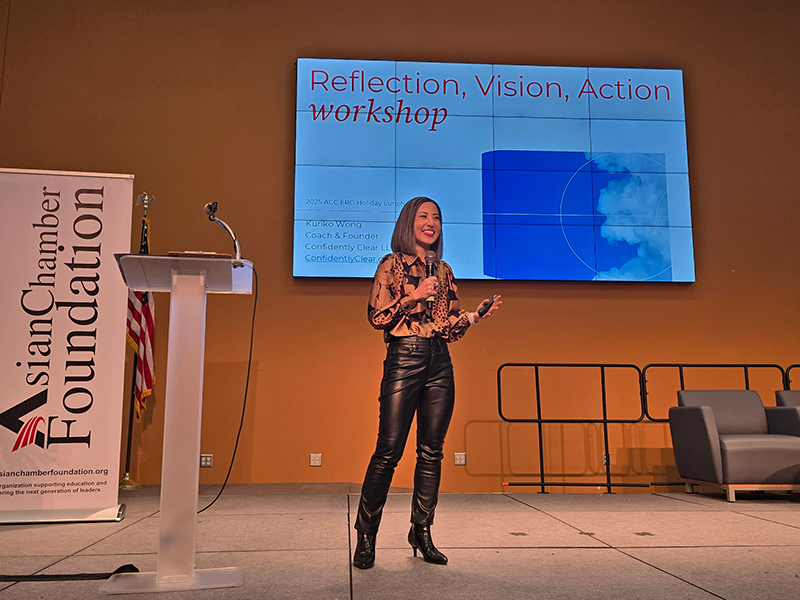
I wanted to turn to some of the community work that you’ve been doing. One of them is Toastmasters International. To illustrate how fluent you are in Spanish, you were the head of the Spanish speaking Toastmasters Club in Houston. Would you mind talking a little bit about your work there?
Well, I don’t know if that demonstrates how fluent I am! But yes, I was in Toastmasters, which is a leadership and public speaking club, for about eight years.
I joined it because I wanted to be a better spokesperson and presenter in Spanish, which isn’t my native language. It definitely helped me do that and maintain my Spanish [skills], because I don’t speak it every day. It helped me get comfortable and habituated to being uncomfortable.
I love that!
And I was uncomfortable! I had to lead this club and give impromptu speeches in Spanish, and I didn’t have the vocabulary to fully express myself. But it gave me the practice of just constantly being uncomfortable because even though people tell me I look confident, it doesn’t mean I don’t feel nervous. But even if I’m feeling nervous, I can still do the work that’s needed.
And I served as the president of the club because I wanted to give back to the community that had long supported me. It was uncomfortable, but I knew that was a desensitization process or exposure therapy, so to speak.
And [through this video interview] I see that you have the motto “comfortable being uncomfortable” right behind you. I guess it’s one of the words that you live by.
Yes, it really is. It’s that zone of discomfort. I think I’m learning [from that] and moving forward. Having a better relationship with this discomfort or fear or whatever you feel, reframing that, and rewiring your brain to think differently—I think that’s really important in making things happen in our lives.
A Multicultural Home
I’d like to change gears a little bit and ask about your family. Your last name is Wong, and you mentioned that you’re married to a Chinese American individual. I was wondering if there are any multicultural aspects at your home. Perhaps you have different dishes that you cook, like some dishes that you cook might be Japanese and maybe he cooks Chinese dishes?
I guess it is very multicultural. My husband’s Chinese American and he grew up in the Houston area. His father is from Hong Kong, and his mom’s also Chinese American. So it’s an interesting mix of cultures there as well.
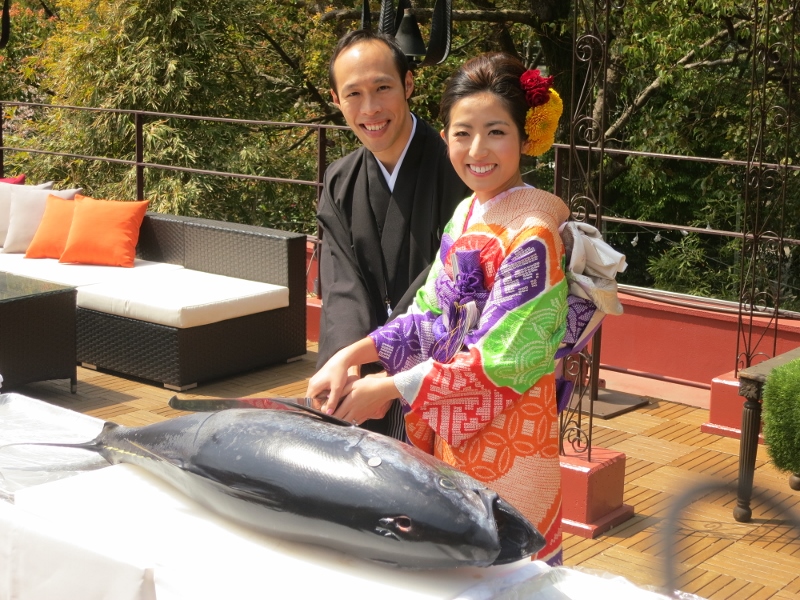
Yeah, I guess it does show up in the dishes that we make. I bring different cultural backgrounds. While I am Japanese and living in America, I also lived in Chile. By learning these different languages, I’m also bringing in different things to the table—the actual table!
My husband doesn’t speak Chinese. He’s actually learning Japanese. It’s tricky between intimate partners. It’s hard to teach the other person things, especially languages. It’s sensitive territory. But it’s pretty cool to be able to share my culture, and for him to understand Japanese culture better through the process of learning the language.
That is really cool how you grew up in a completely different environment, but have a lot in common and get along so well. That’s really inspiring.
Finding Authenticity
Would you have any advice for anyone else who might be struggling with their identities, or thinking about what sort of career to pursue, where to be based, etc., and being torn about those decisions because they have ties to multiple countries?
That’s an interesting question. First, I’m not an expert, because I also struggle with that, too. I have long struggled with that in a way that I didn’t even realize.
We already talked about just how determined I can get. But determination also comes with hyper focus. Hyper focus on other people’s cultures and languages and other people in general can also come at the cost of denying or ignoring your own culture and language. You zoom in so much and don’t see the rest of it.
For me, that was entangled with the early career experience of trying to prove myself, trying to make it in the United States and in this language-intensive field where I was using English. It will never be my first language. So there was a lot of tension and I was very focused—maybe too much.
[I just turned 40] and as I’m thinking about this new decade, I want it to be about really embracing both yin and yang. It’s not just taking in and being whatever it is that I think everybody wants me to be, but also giving myself and sharing my culture. Who I am is undeniably influenced by where and how I grew up. So I want to balance that more as I go into this new decade.
And I think the theme at the center of this all is authenticity. I’m grappling with that too. What is authentic to me?
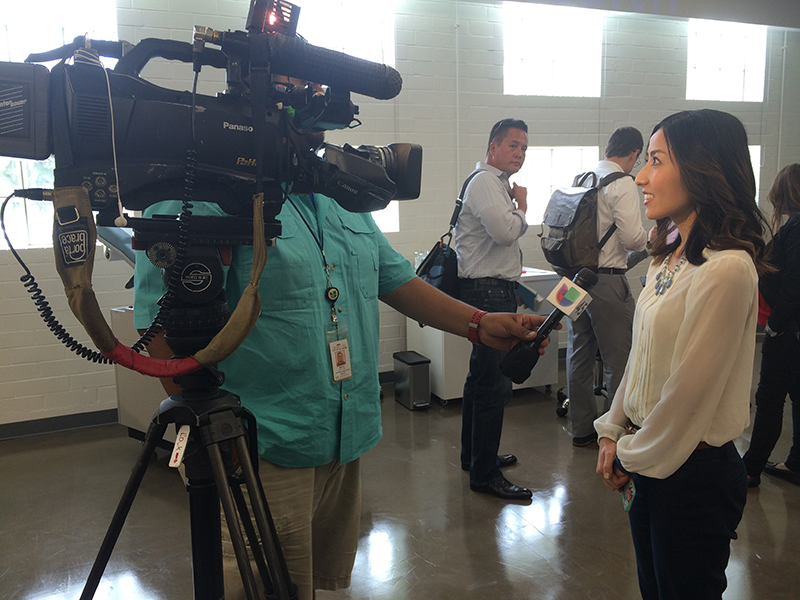
And Shiori, I really want to thank you for having me today. I spent 20 years in PR, so I’ve been in front of cameras, but I’ve never represented myself. So this is a new experience for me and a little scary, but I thought that it was important for me to do this.
We can come up with this public facade, representing somebody that we think people want us to be. It’s a protective layer that may have been very useful in certain circumstances of our lives and may still be in the future.
But I think being authentic is also rewarding because it feels peaceful if you can be there without all these scary risks. And it also helps us connect with other people profoundly.
This is something that I’ve been thinking about, and I invite other people, multicultural or not, to be curious about this. Is the circumstance, the context that we are in right at this moment, actually as scary as it seems?
You should be analytical about it. Are these real risks? If it presents a physical danger, do pretend to be that person [that they want] because the reward of being authentic is probably not worth the physical harm you get.
But oftentimes when you question this, it’s just an emotional risk. Can you survive that emotional risk? Maybe. Maybe not. If it triggers deep emotional trauma that you’re not ready to face, maybe that’s not the moment to do it. Maybe we need to detangle that a little bit. I think it’s a case-by-case decision, but the deep, profound connections that you can build for being who you are is super rewarding.
I am somebody who became multicultural by choice. I could have stayed in Japan and stayed monocultural because that’s how I grew up. Or maybe not, because I couldn’t help but [go study abroad and come to the U.S.]. But we’re lucky to have this experience.
Multicultural backgrounds are beautiful. You get to see the world in so many different ways. You can see it as a challenge, but you can also see it as an opportunity. I think that is what I want to invite people to do. [Ask yourself] what is the opportunity that we have uniquely because of who we are?
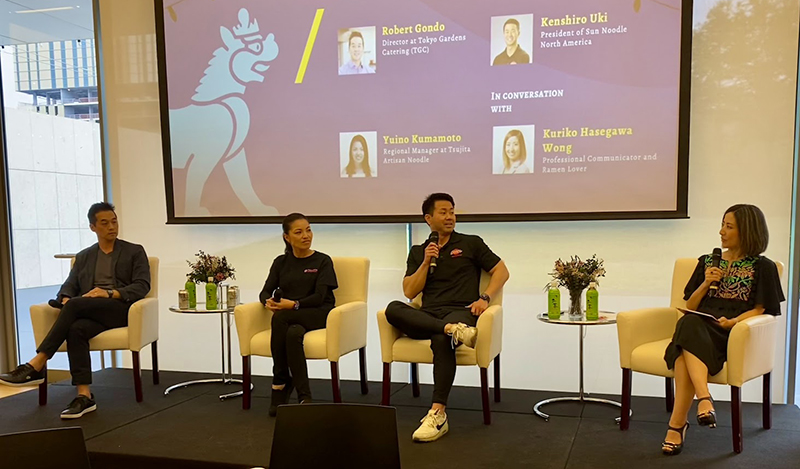
That really resonates with me. You said how, in the beginning when we just start to settle in the U.S., so many of us try to erase or ignore or forget part of the culture that we came from. This is something that I went through and some other interviewees [of this podcast] mentioned as well.
We are so much happier when we come full circle and embrace both cultures at the same time. And that’s what helps us become authentic as well. So I really appreciate what you said about being yourself.
I’m so glad I got to interview you today because if this is a rare opportunity for you to speak for yourself, this is an amazing chance for me as well to get to hear your story directly. So thank you so much.
Thank you so much. I really appreciate this opportunity, and it’s been fun.